



Skeletal muscle contraction physiology
Excitation-Contraction Coupling
Last update:
Excitation-Contraction Coupling (ECC) is the process by which electrical excitatory stimuli cause a chemical response that contracts a muscle.
A Closer Look at Excitation-Contraction Coupling:
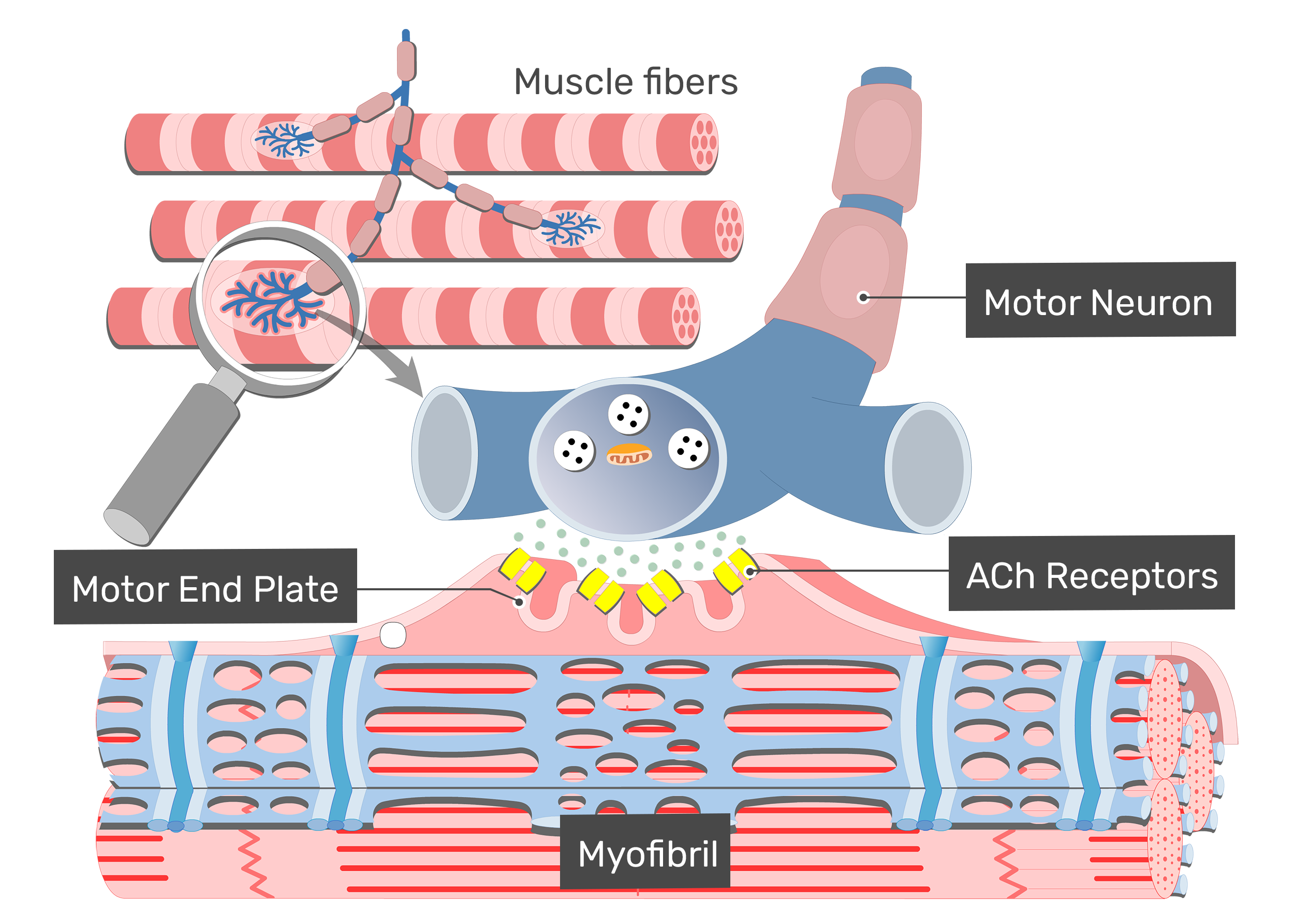
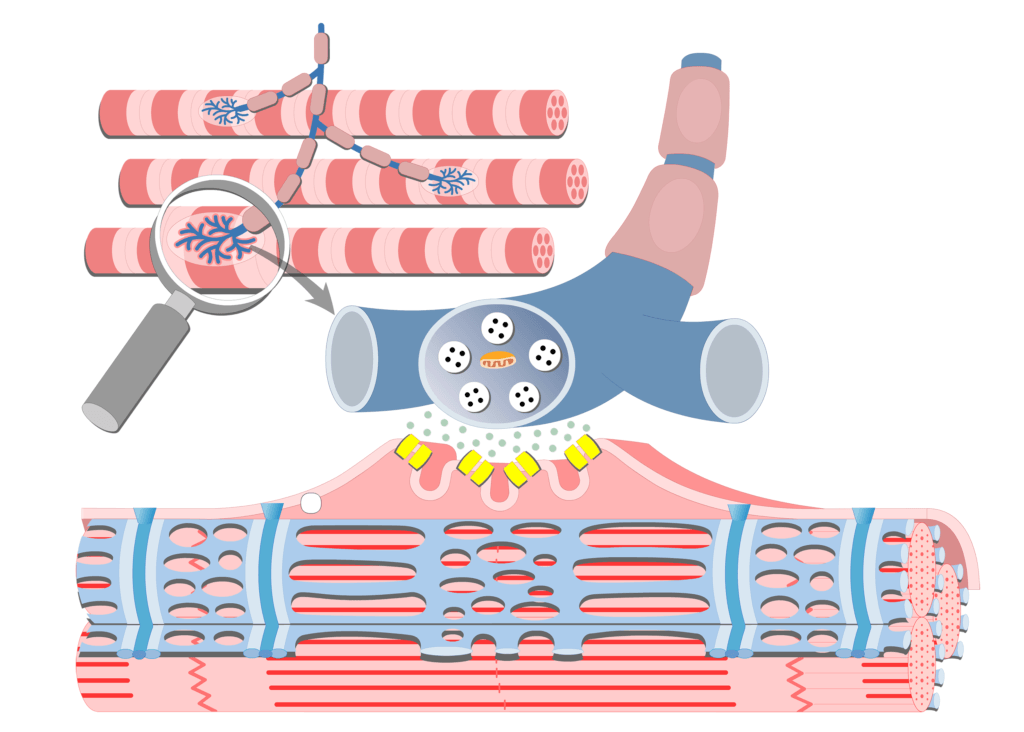
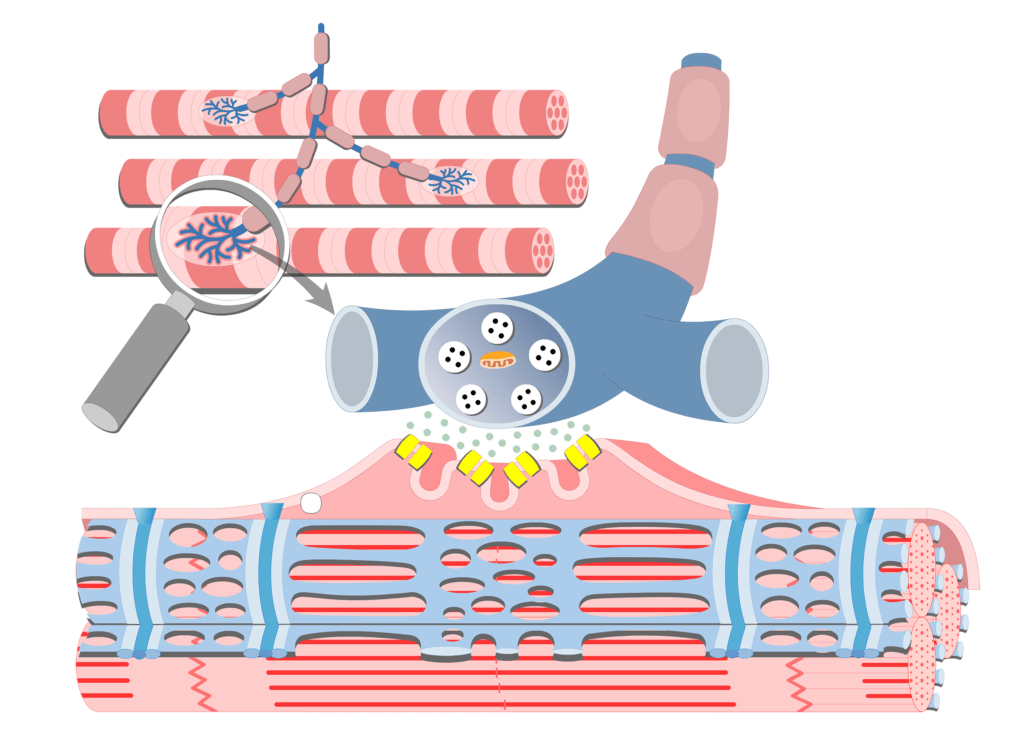
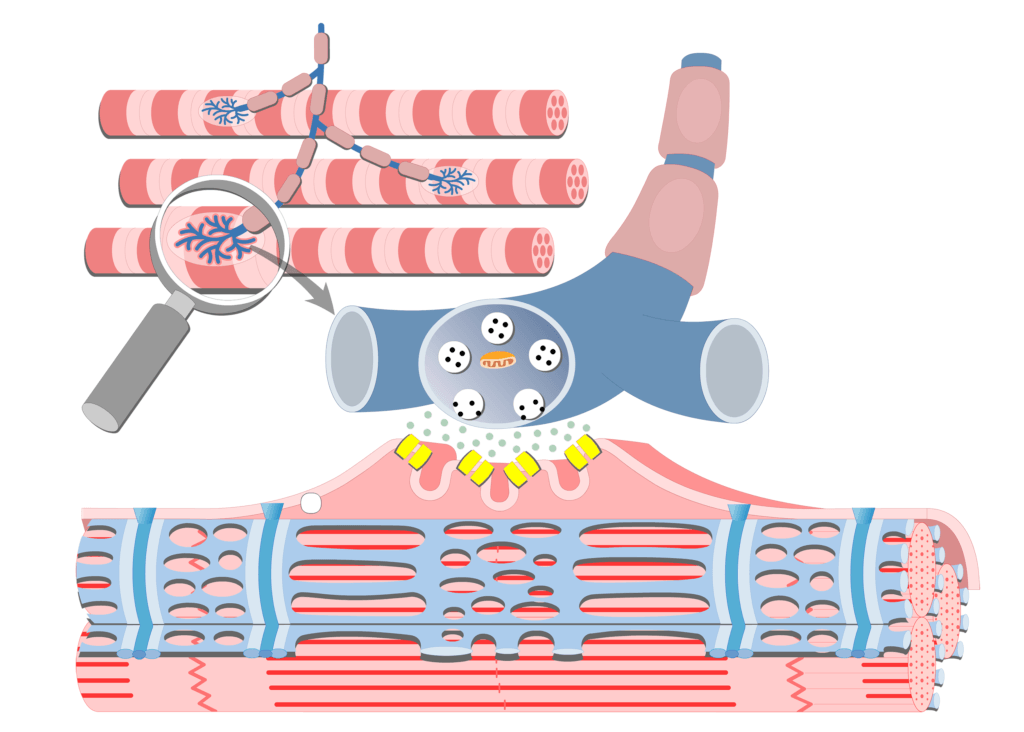
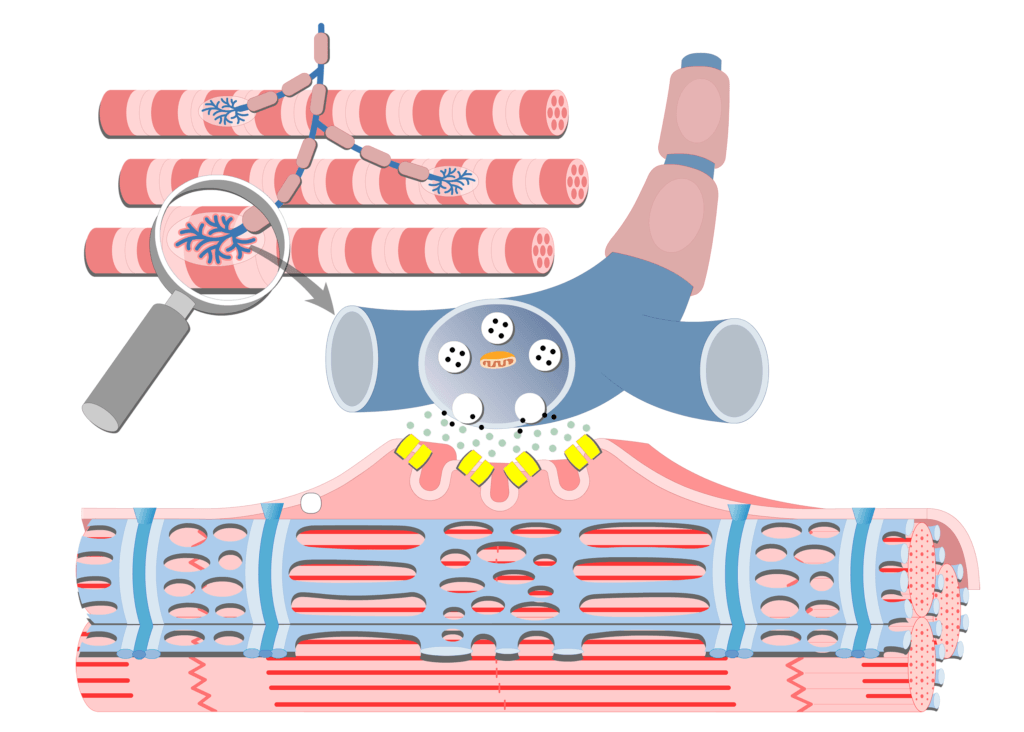
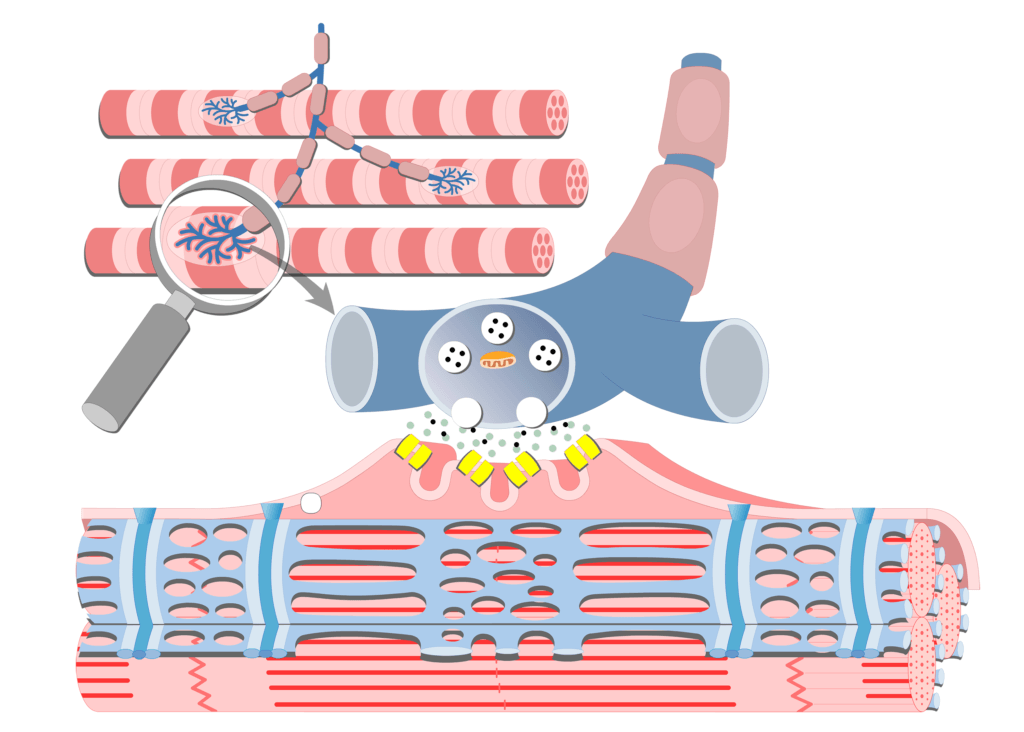
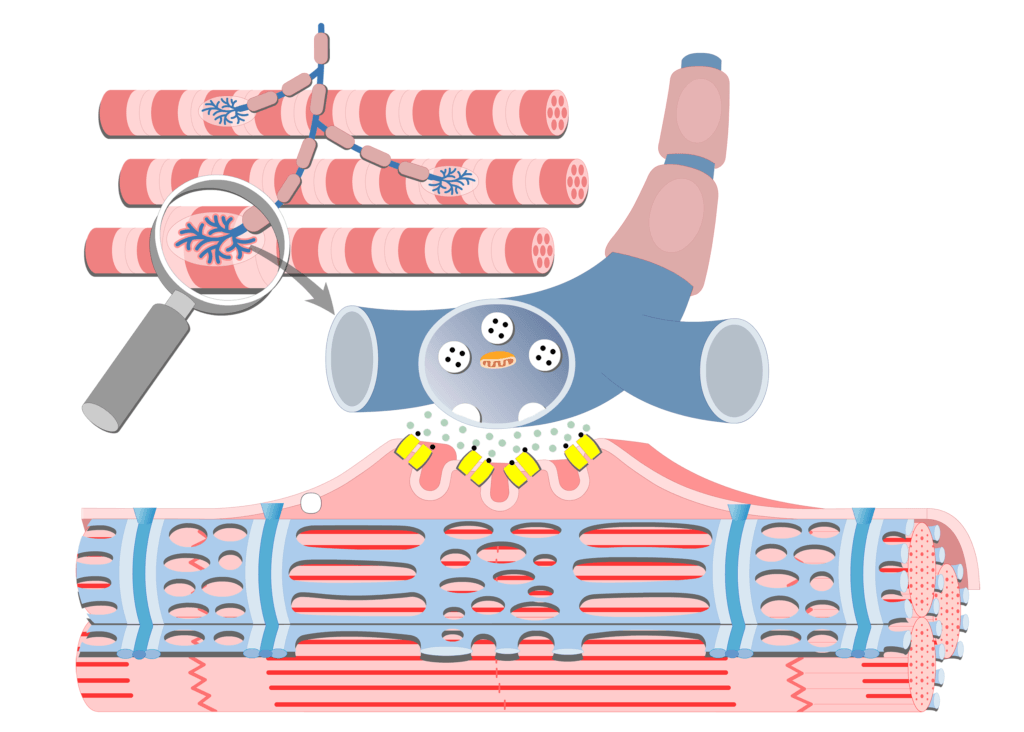
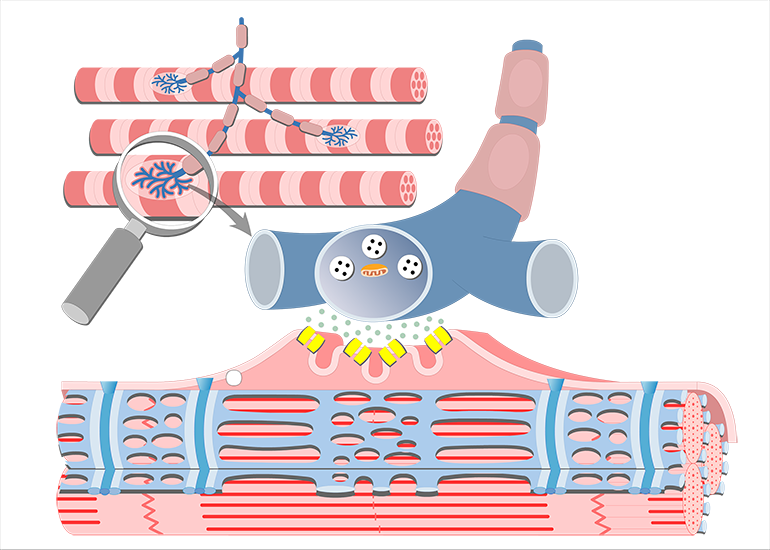
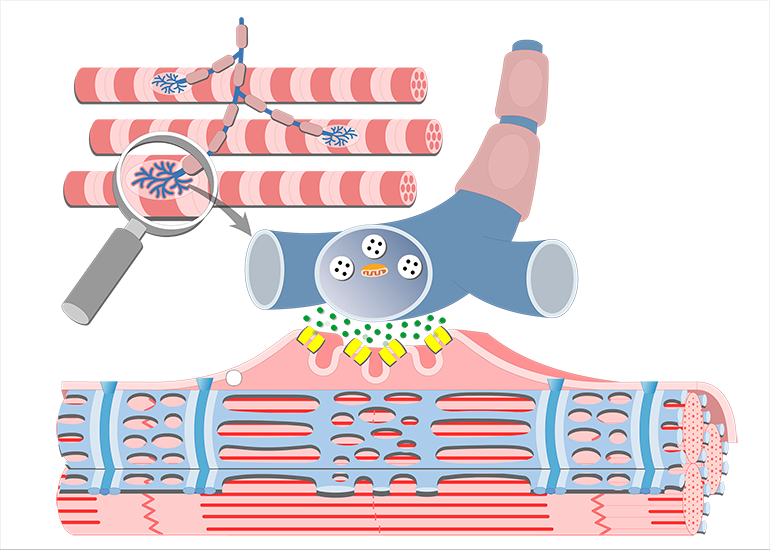
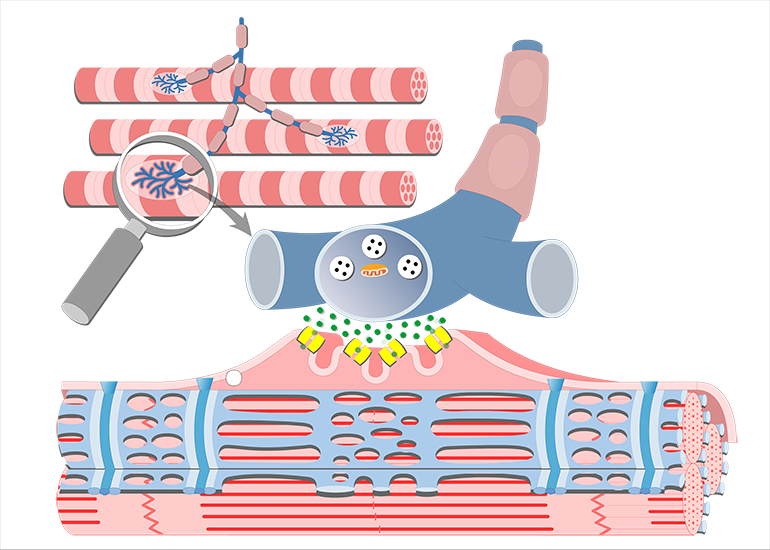
 Stimulation of a muscle fiber opens Na+ channels (= acetylcholine or ACh receptors) in the synaptic sarcolemma (= motor end-plate).
An influx of Na+ (= positive) ions through the open channels z the area, producing an end-plate potential (= EPP).
Learn more about muscle tissue and how to identify it under the microscope with these videos and interactive quizzes.
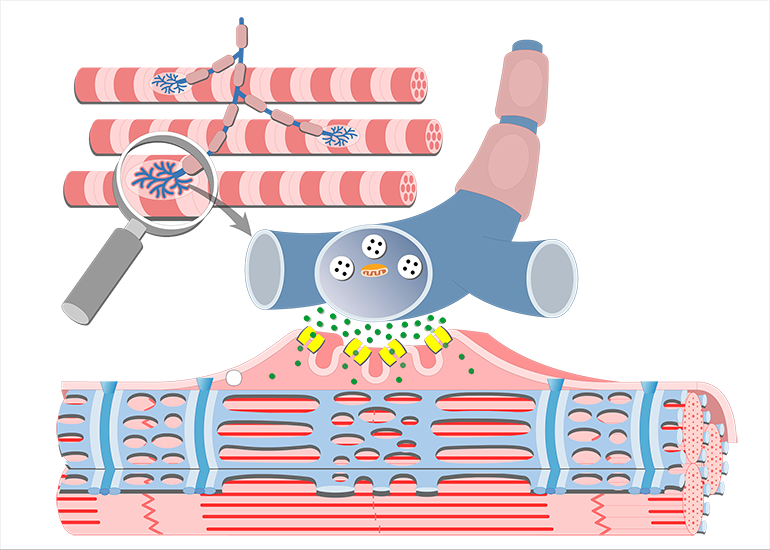
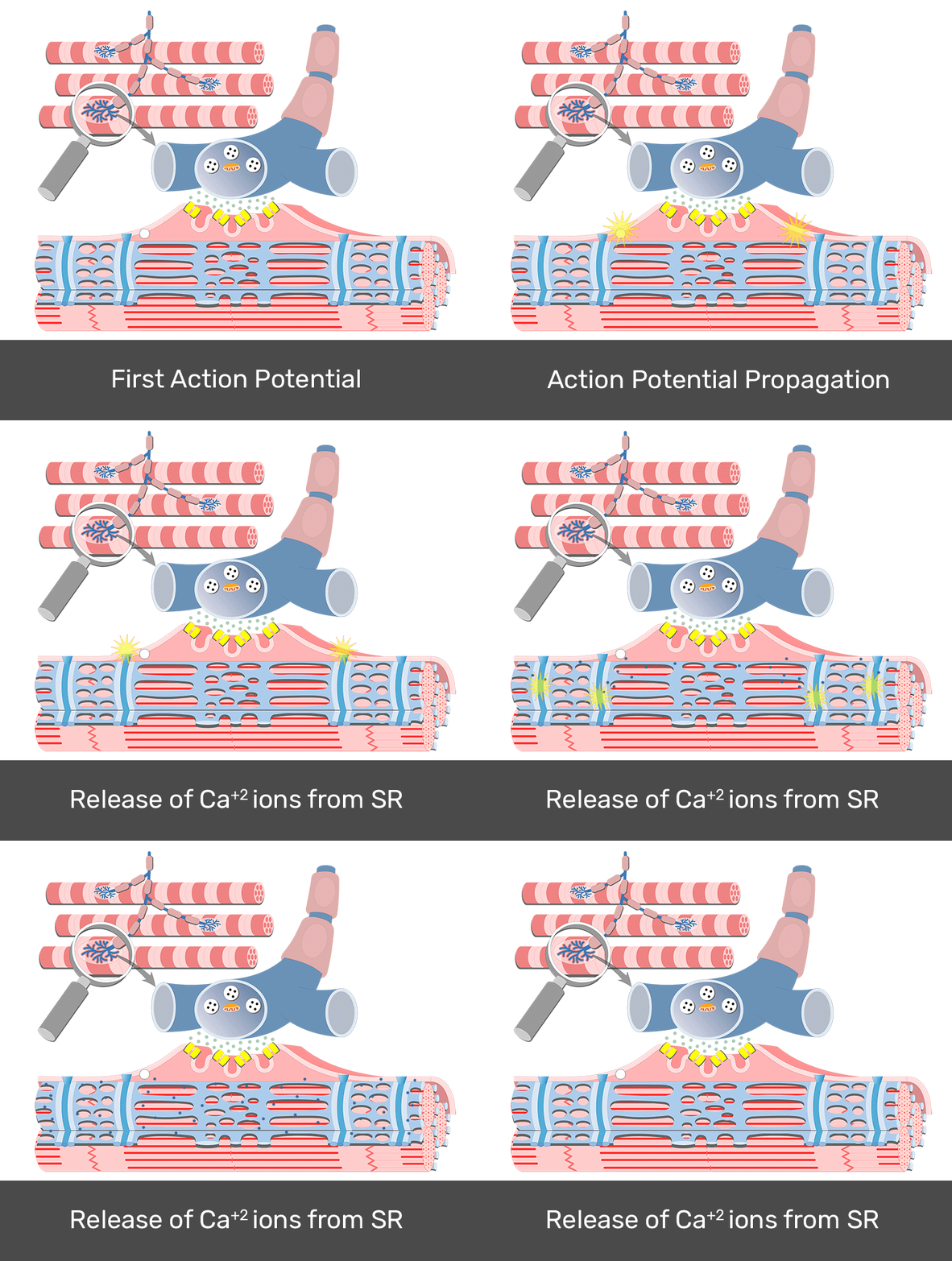
The EPP generates action potentials in the sarcolemma next to the end-plate: (See the GIF below)
- This initial set of action potentials starts a chain reaction, as one set of action potentials stimulates others to develop.
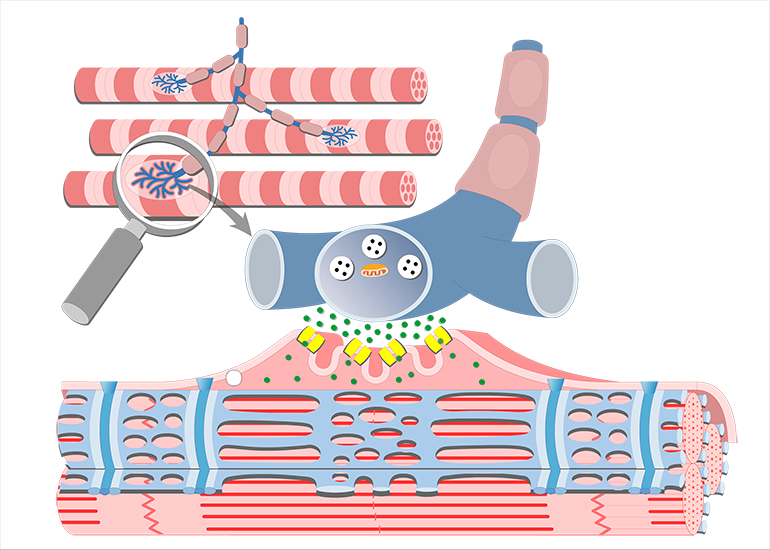
- A resulting wave of excitation propagates (= spreads) along the sarcolemma. The wave of action potentials enters the muscle fiber at the transverse (T) tubules.
- As the action potentials travel down the T tubules, calcium channels in the nearby terminal cisternae of SR open, and Ca2+ ions diffuse into the surrounding sarcoplasm. The Ca2+ ions bind to troponin proteins embedded along the thin filaments and the contraction process begins.
Test Yourself: