

Multipolar Neurons - Structure and Functions
Nerve Structure (Anatomy and diagram)
Last update:
 Nerves are the organs that make up the peripheral nervous system (PNS). They serve as information pipelines that allow the brain and spinal cord to communicate with other tissues and organs.

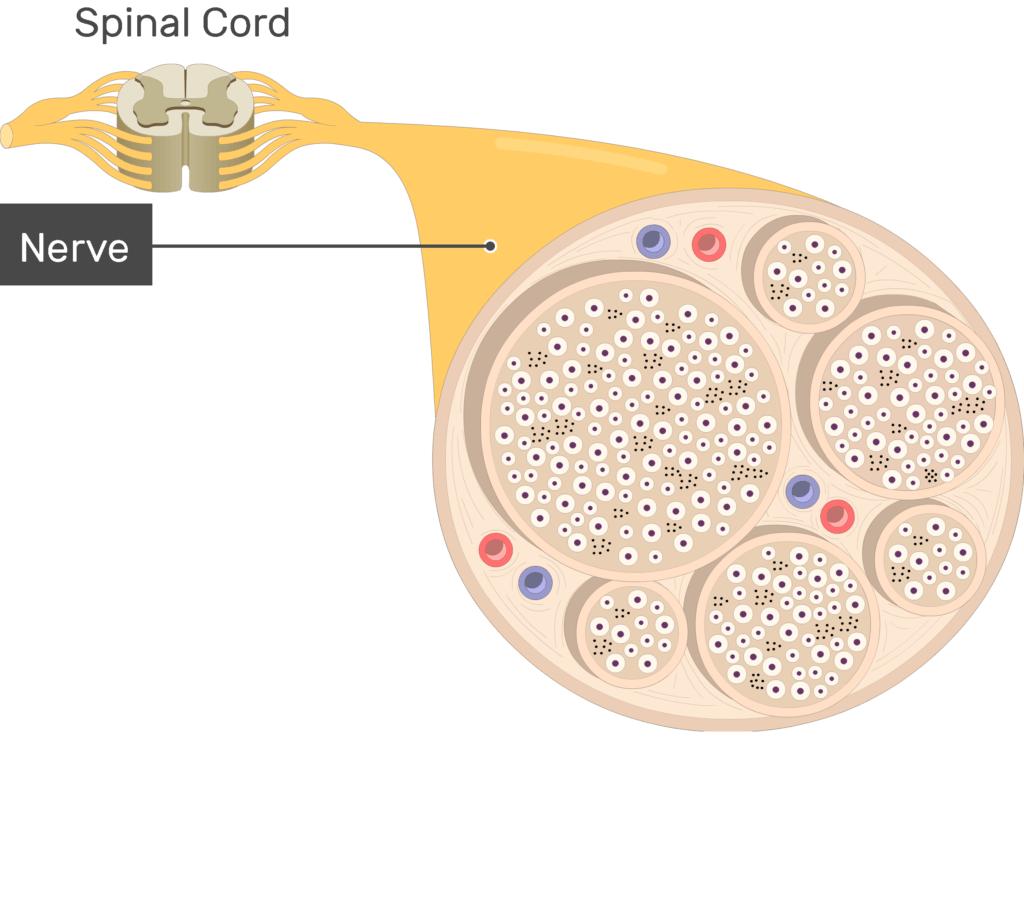
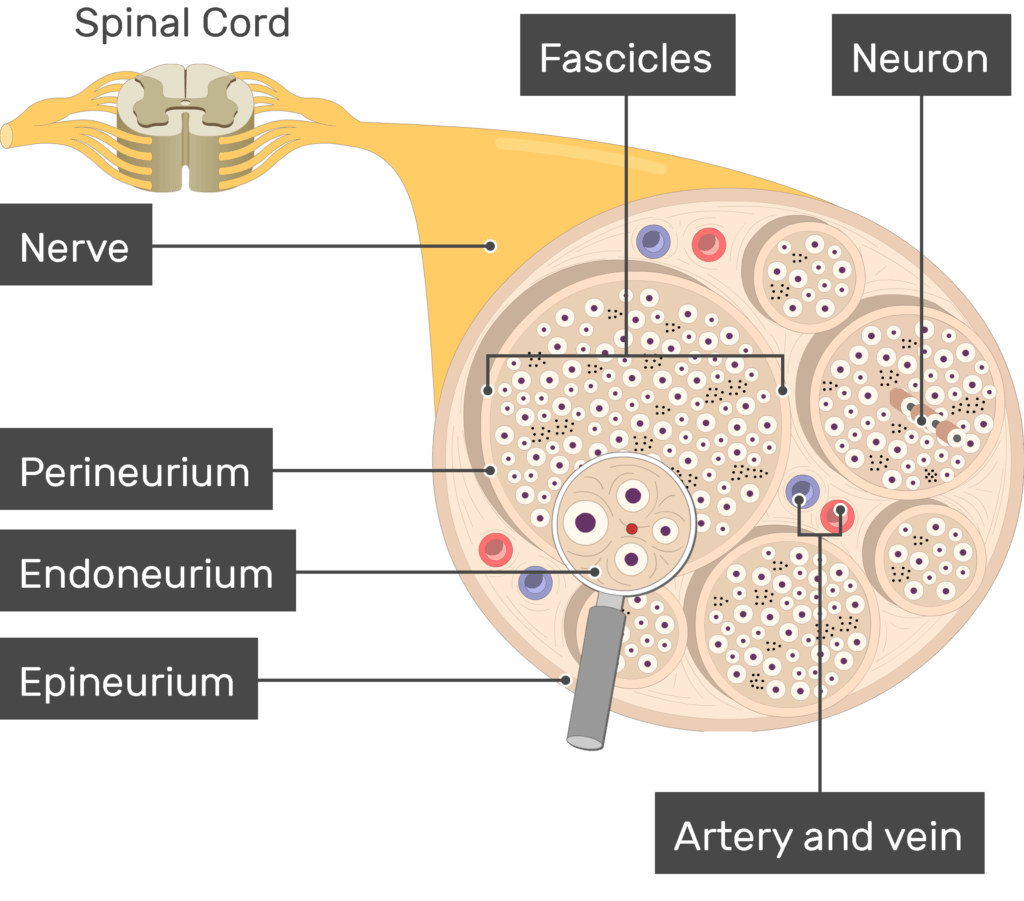
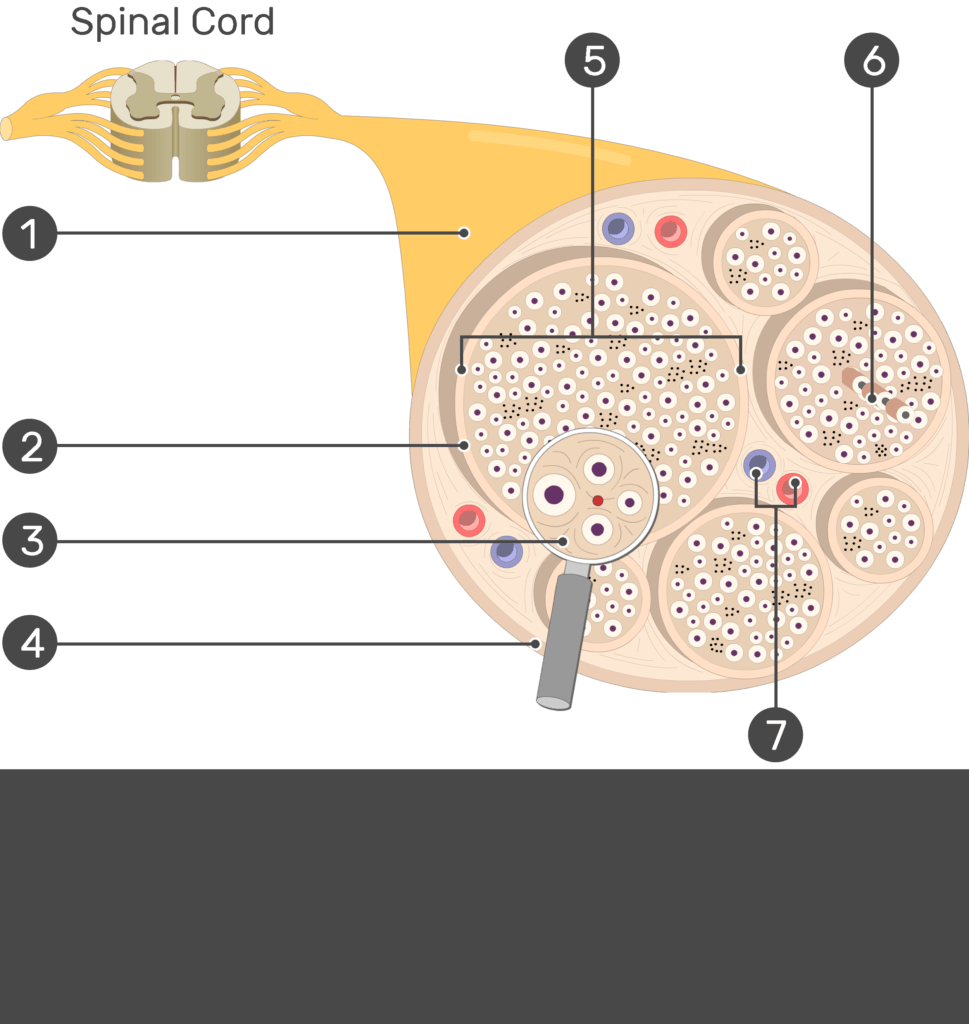
- Inside the nerves, groups of neurons (nerve cells) are organized into bundles called fascicles (fasciculi).
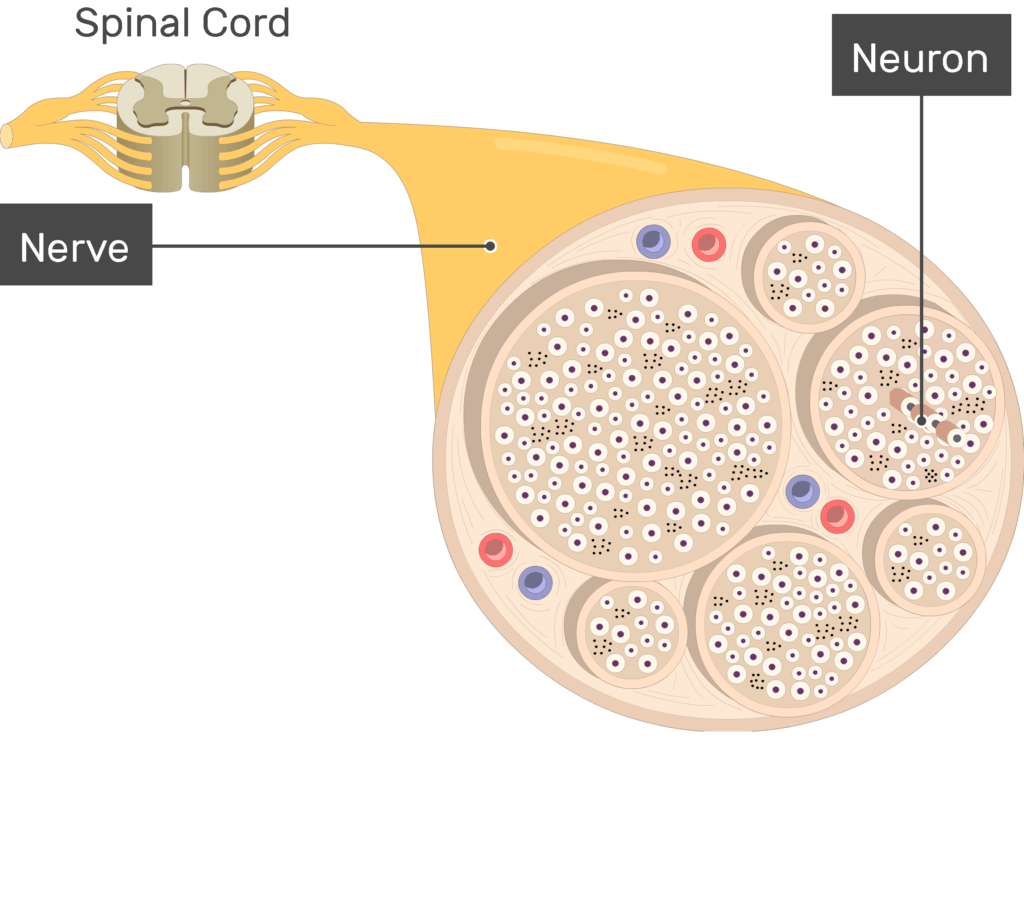
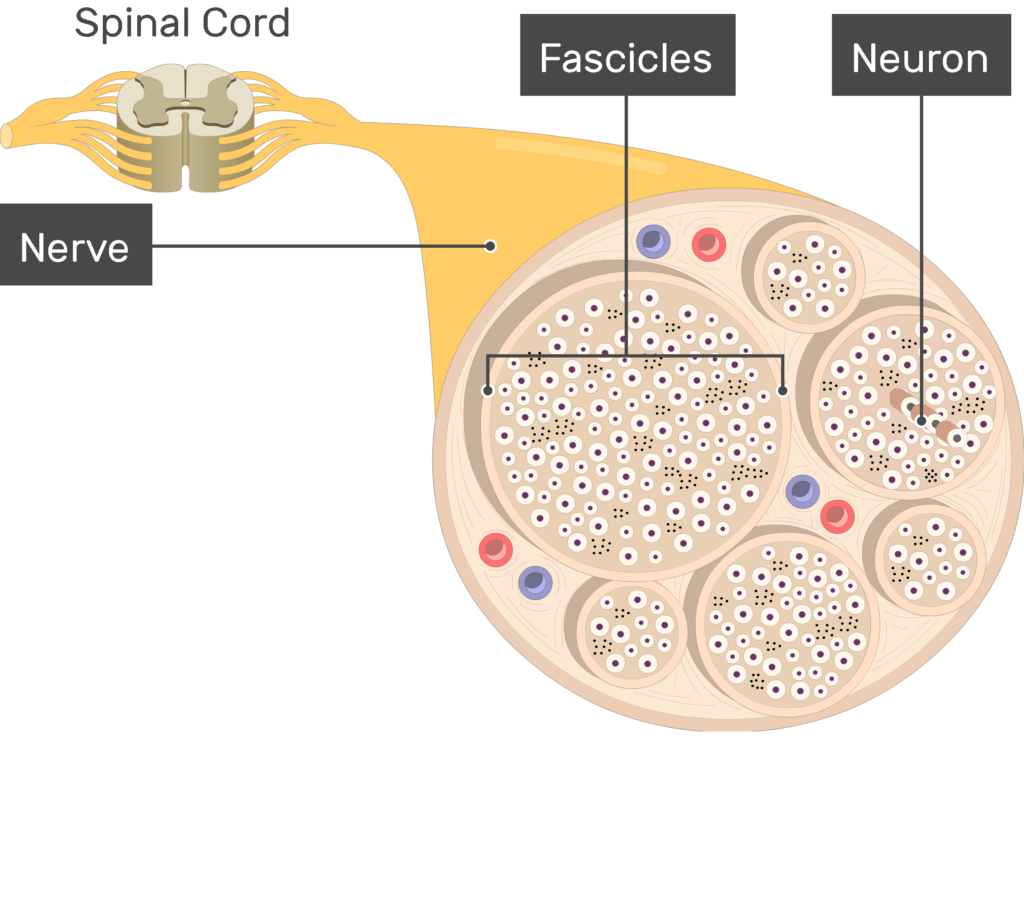
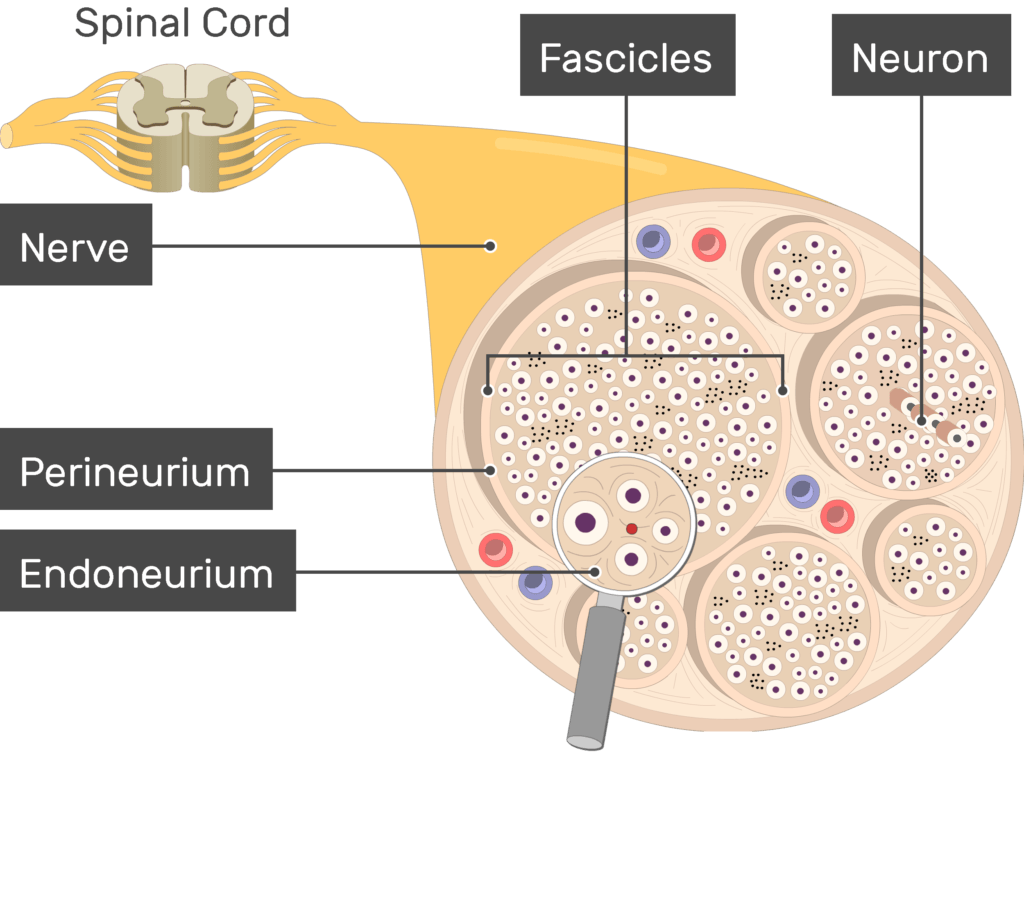
- Surrounding and holding together each fascicle is the perineurium.
Identify holes in your nervous system anatomy knowledge with these interactive quizzes and labelling exercises.

- This layer appears concentrically laminated and is composed of flattened cells, basement membrane, and collagen fibers.
- Inside the fasicles, neurons and blood vessels are held in place by a loose connective tissue referrred to as endoneurium.
- Epineurium, a layer of dense connective tissue, covers and holds together the outer surface of nerves.

- Arteries and veins are located between the fascicles. Branches of these vessels enter the fascicles and supply the neurons with nutrients and gases.
Overview:

Swipe to show/hide the answers
Related Articles

Spinal Nerve Roots
The spinal nerve roots are two pairs extend from each segment of the spinal cord which explained beautifully in an illustrated and interactive way.

Cranial Nerves – Anatomy and Functions
Cranial Nerves (Anatomy and Functions); explained beautifully in an illustrated and interactive way.