

Metacarpal bones
Phalanges of the hand (phalanx bones)
Last update:
Phalanges (singular: phalanx) are the set of 14 hand bones that compose the bony skeleton of the fingers. Each finger has three phalanges, called proximal, middle and distal. The thumb is an exception, having only two phalanges, proximal and distal. The proximal phalanges are the largest in size, while the middle and distal are each smaller than the previous phalanx in the series. The phalanges are labeled with Roman numerals I-V, with those labeled with I being in the thumb, and those labeled with V being in the pinky finger.
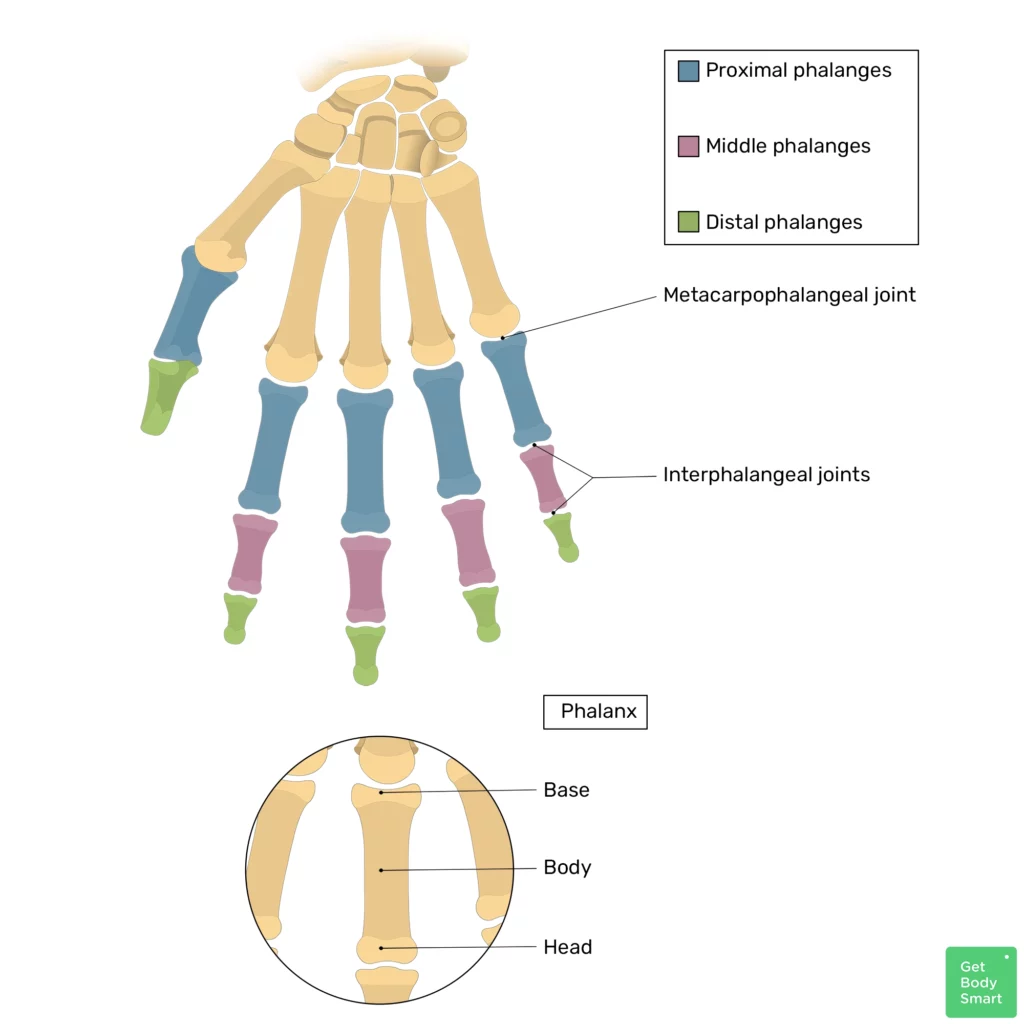
Phalanges of the hand (labeled diagram)
Proximally, the phalanges articulate with the metacarpal bones, forming the metacarpophalangeal joints. Between each other, the phalanges of each digit articulate via the interphalangeal (IP) joints. The IP joints between the proximal and middle phalanges are called the proximal interphalangeal joints, while the joints between the middle and distal phalanges are called the distal interphalangeal joints.
Even though small in size, the phalanges are long bones by type. The proximal end of a phalanx is called the base, while the distal end is called the head. Between the base and head is the shaft, or the body.
Learn the bones of the body fast using these interactive quizzes and labeling exercises!
Phalanges anatomy quiz
Solidify your knowledge with an interactive quiz about the phalanges of the hand:
References
- Open Anatomy. (n.d.). TA2 Viewer. Retrieved April 5, 2023, from https://ta2viewer.openanatomy.org/
- Moore, K. L. (2018). Clinically Oriented Anatomy (8th ed.). Philadelphia, PA: Wolters Kluwer.
- Drake, R. L., Vogl, A. W., & Mitchell, A. W. M. (2015). Gray’s Anatomy for Students (3rd ed.). Edinburgh, Scotland: Churchill Livingstone.
- Standring, S. (2021). Gray’s Anatomy (42tst ed.). Edinburgh: Elsevier Churchill Livingstone.
Related Articles
Scapula Bone Quiz
This 2-part quiz tests your knowledge on the anatomical markings of […]
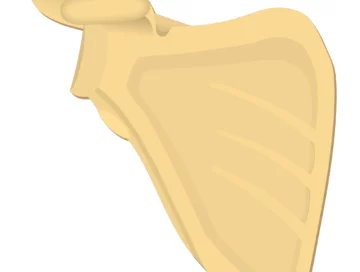
Scapula Bone
The bone markings of the anterior scapula include the superior border, medial border, lateral border, superior angle, lateral angle, inferior angle, coracoid process, suprascapular notch, glenoid cavity, infraglenoid tubercle, and the suprascapular fossa.
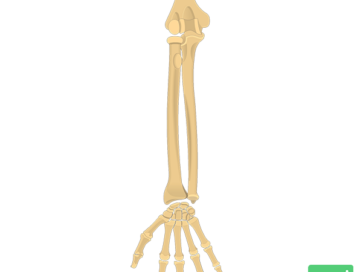
Radius and Ulna Bones Anatomy
An interactive tutorial covering the anatomy of the radius and ulna, the two bones that comprises the forearm.