























Electrical conduction system of the heart
Examples of Autonomic Nervous System Pathways
Last update:
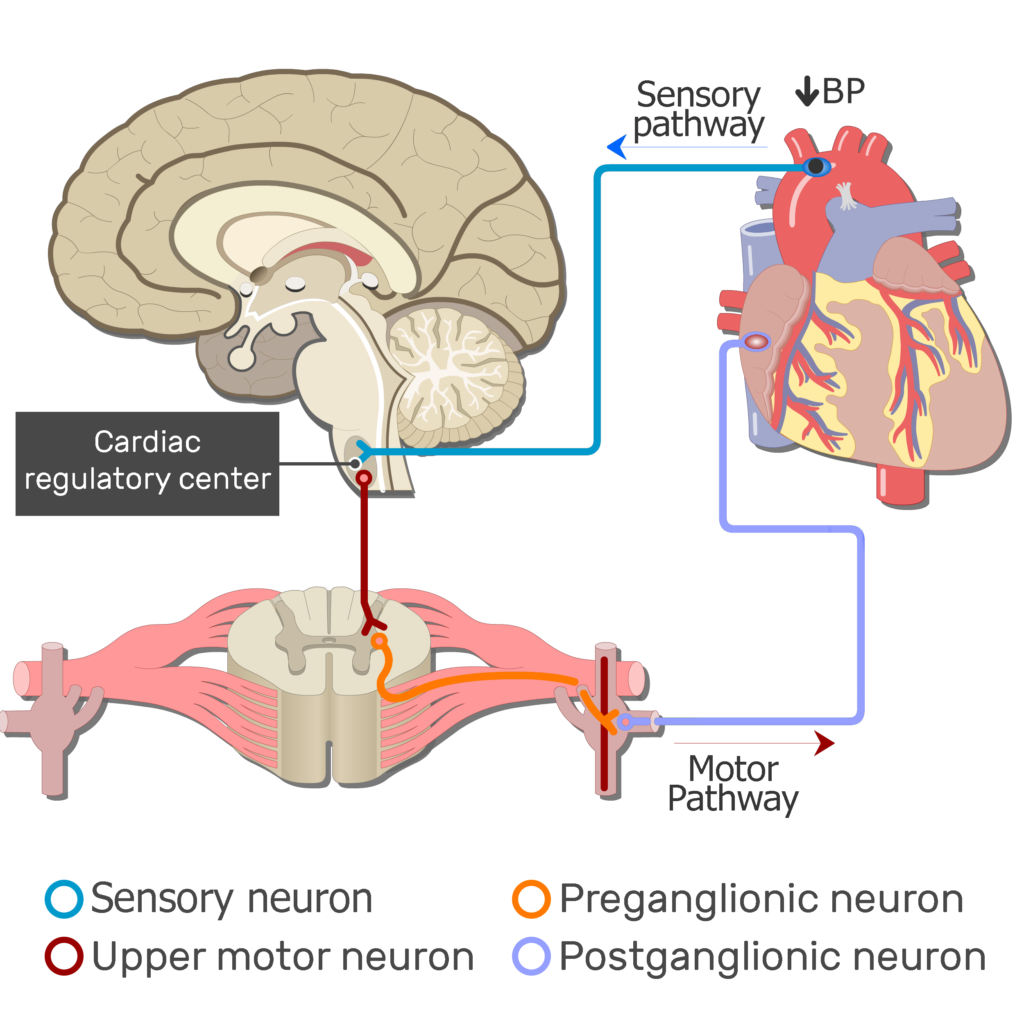
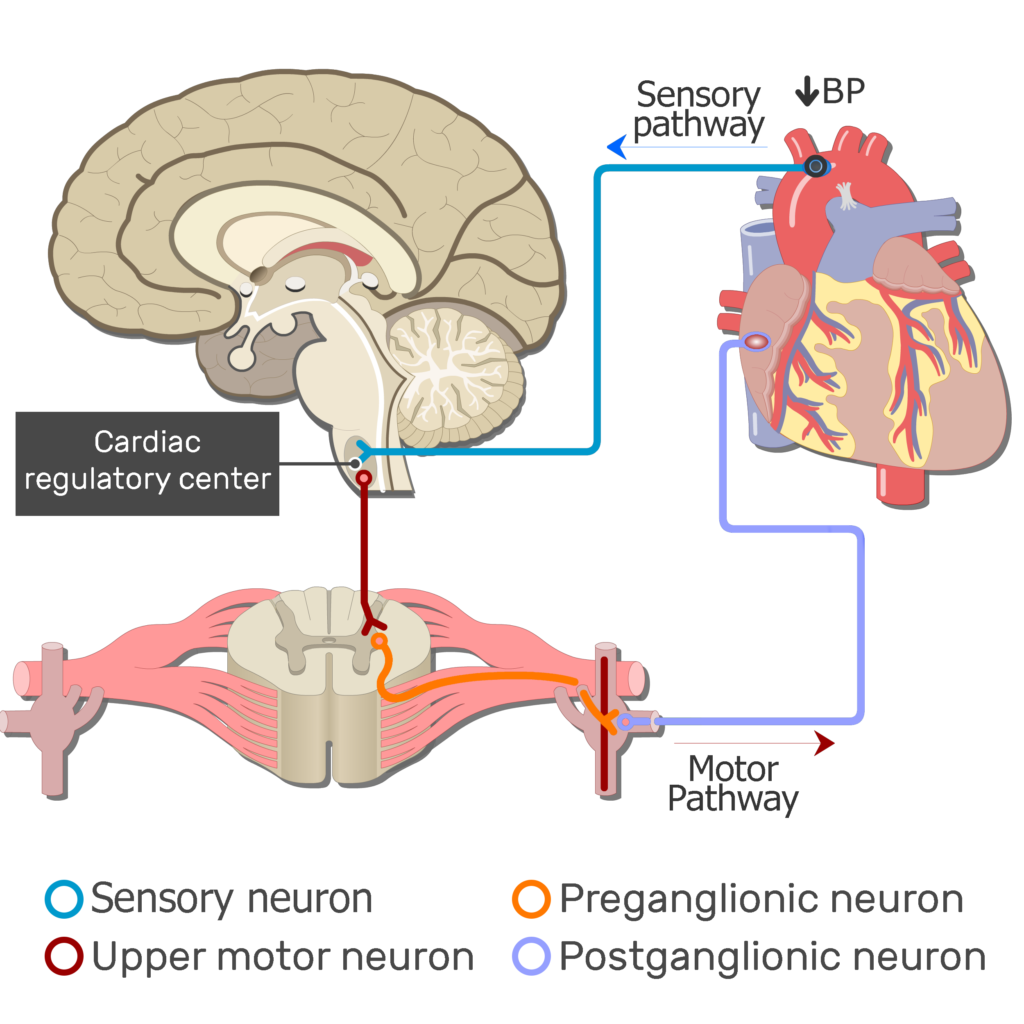
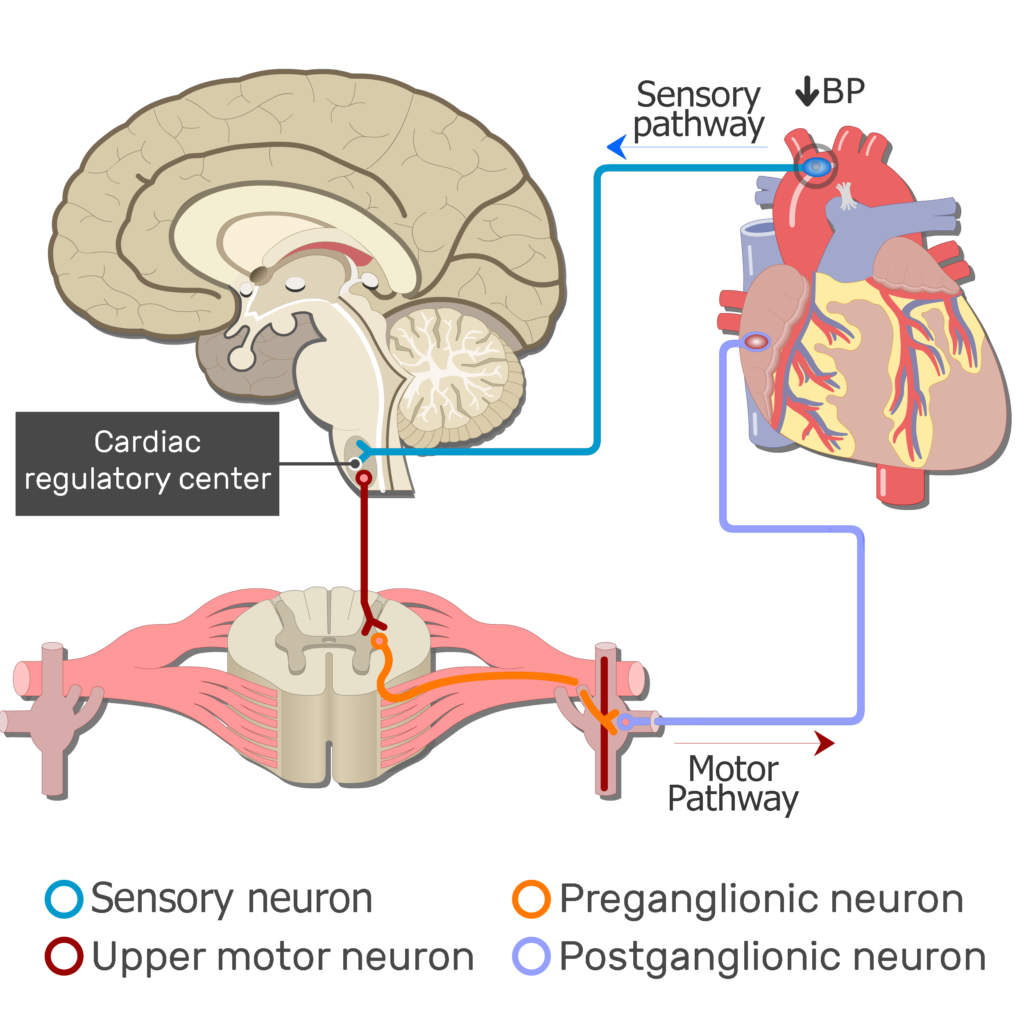
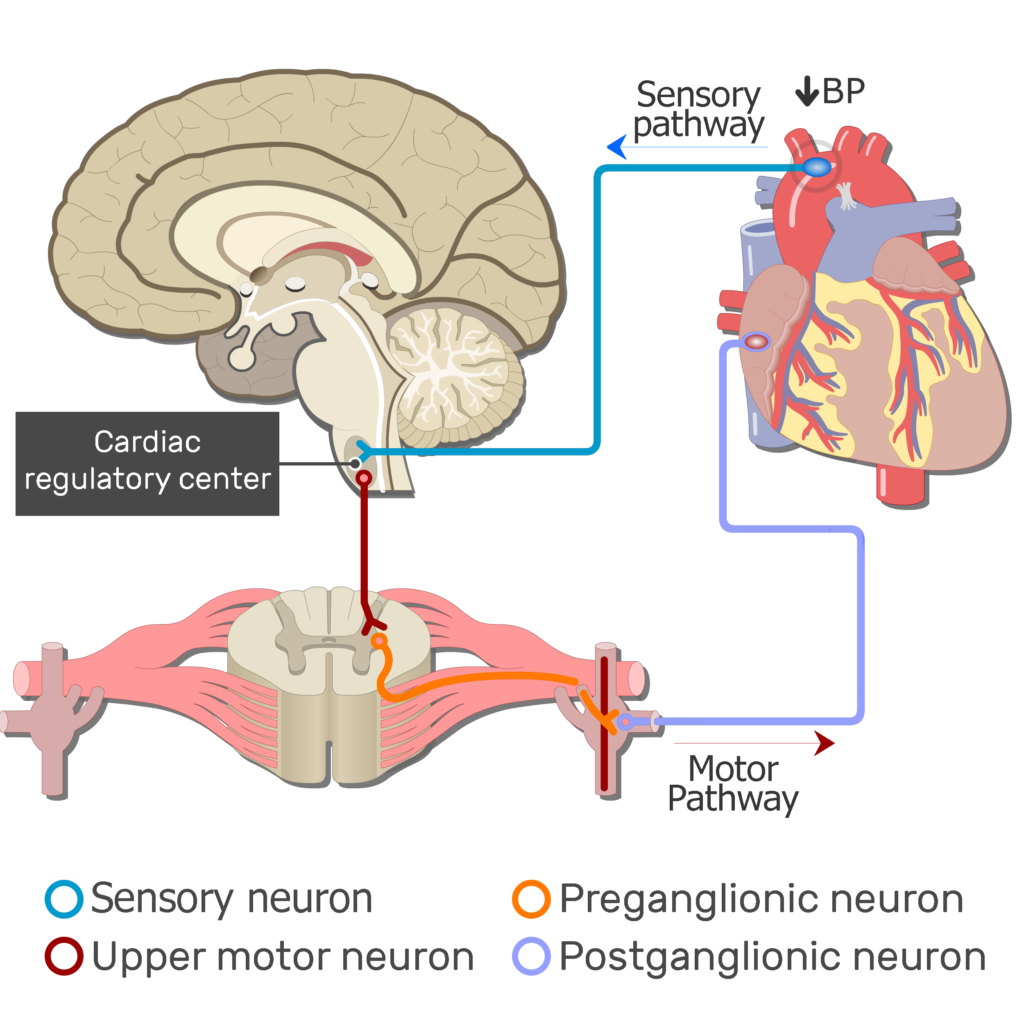
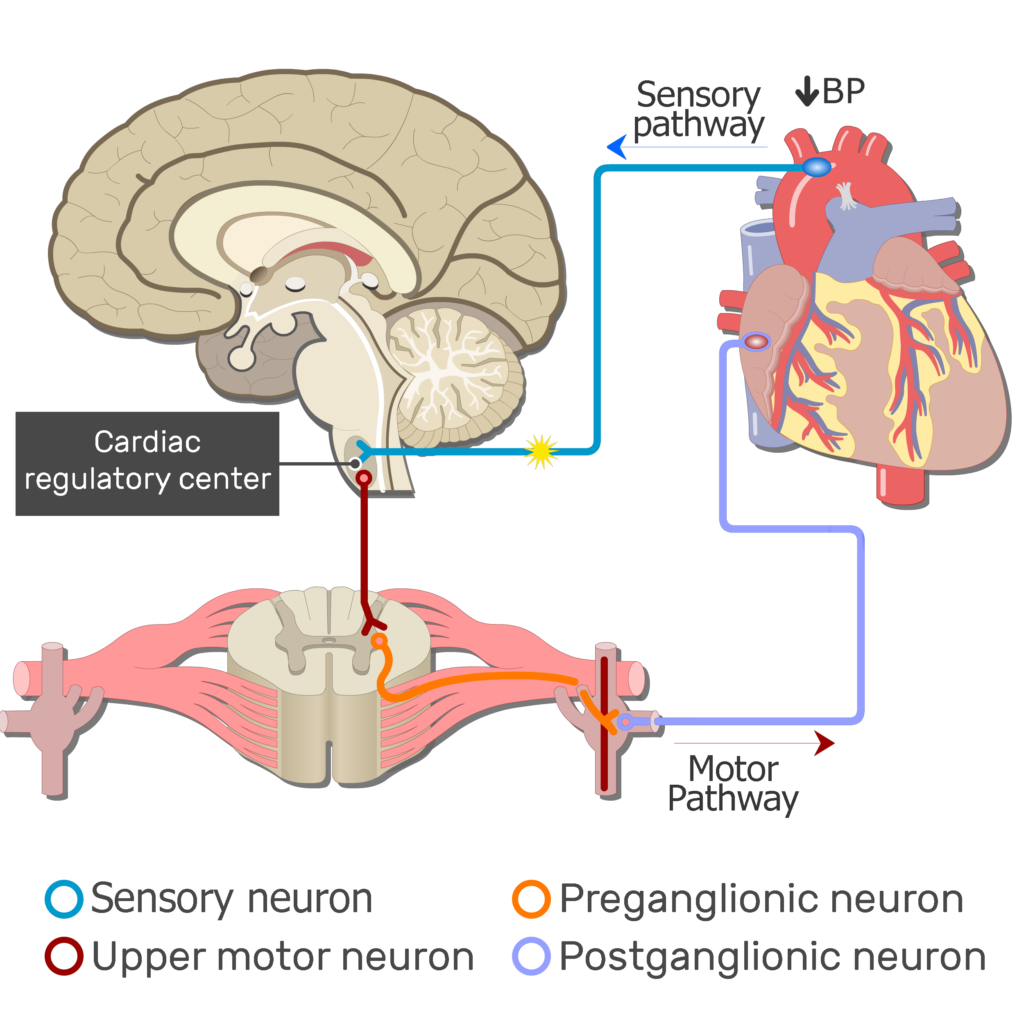
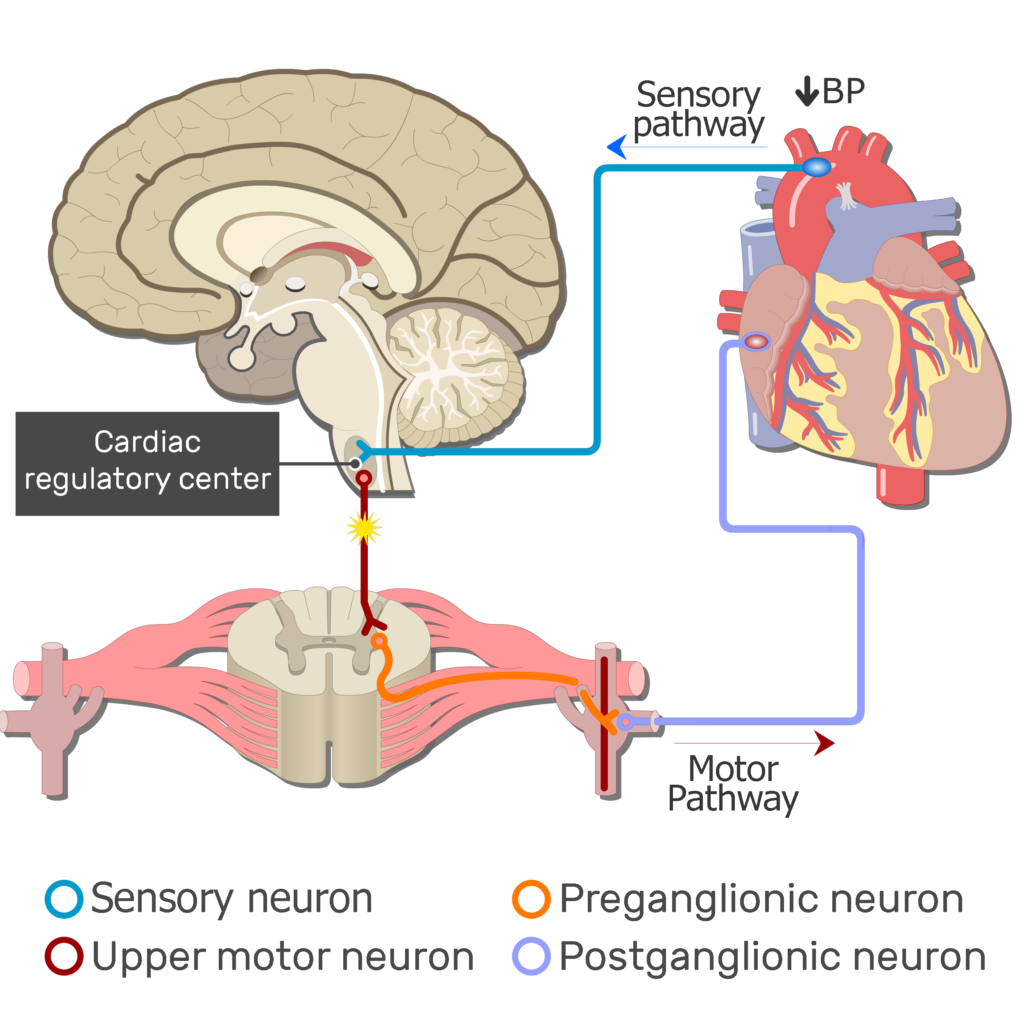
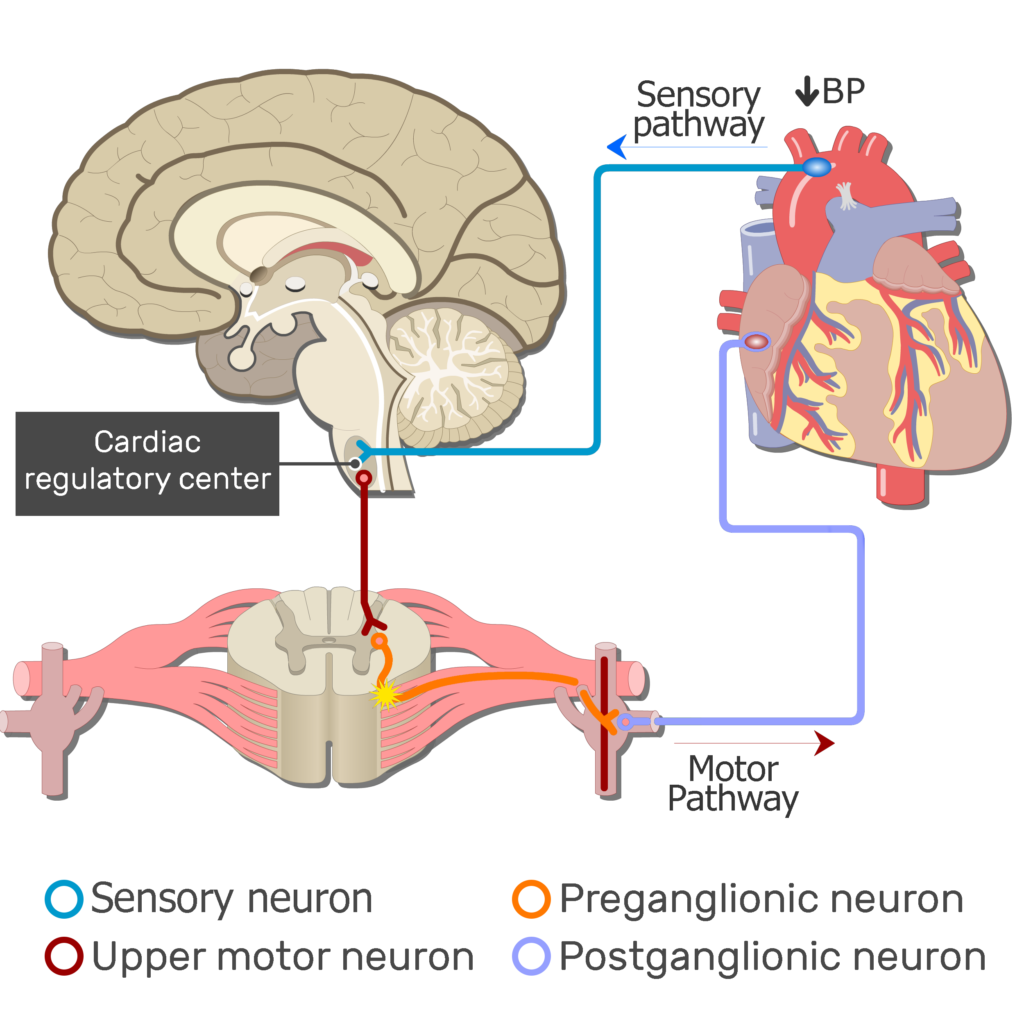
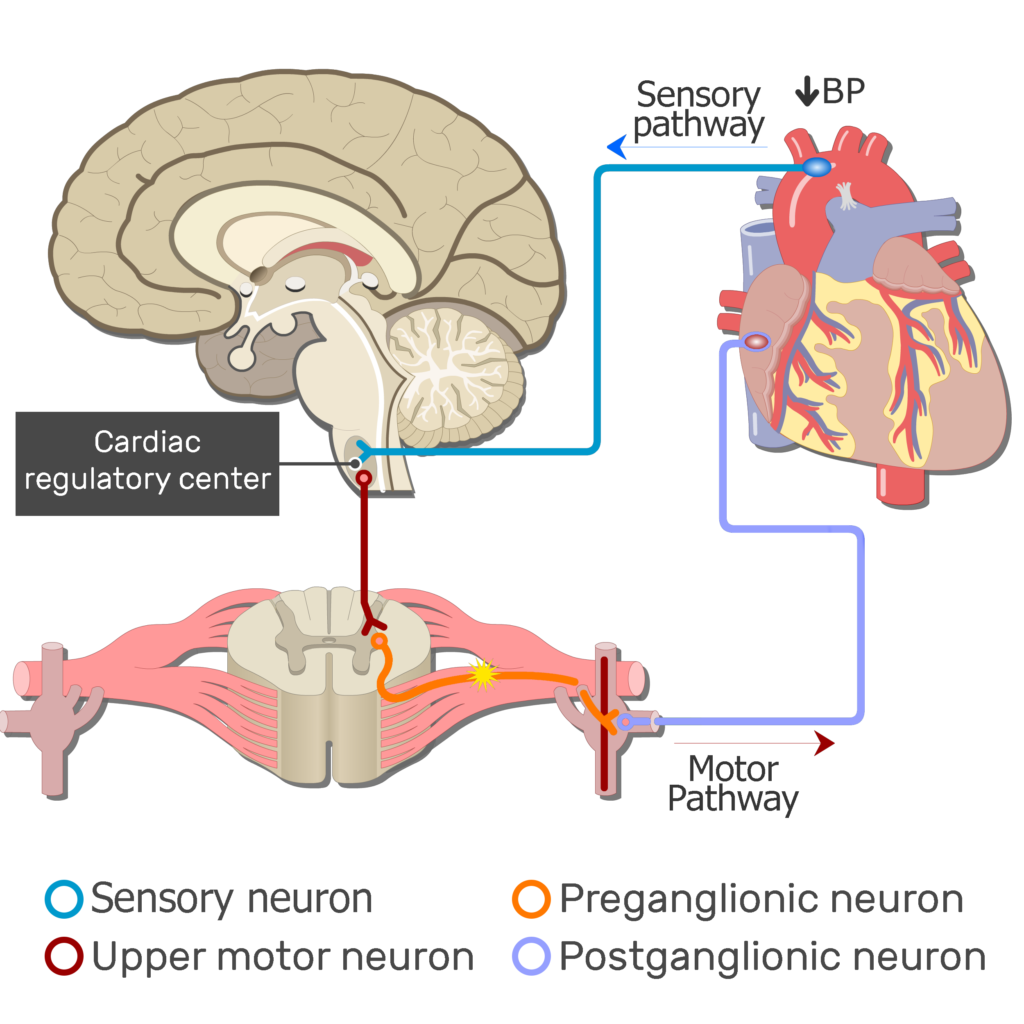
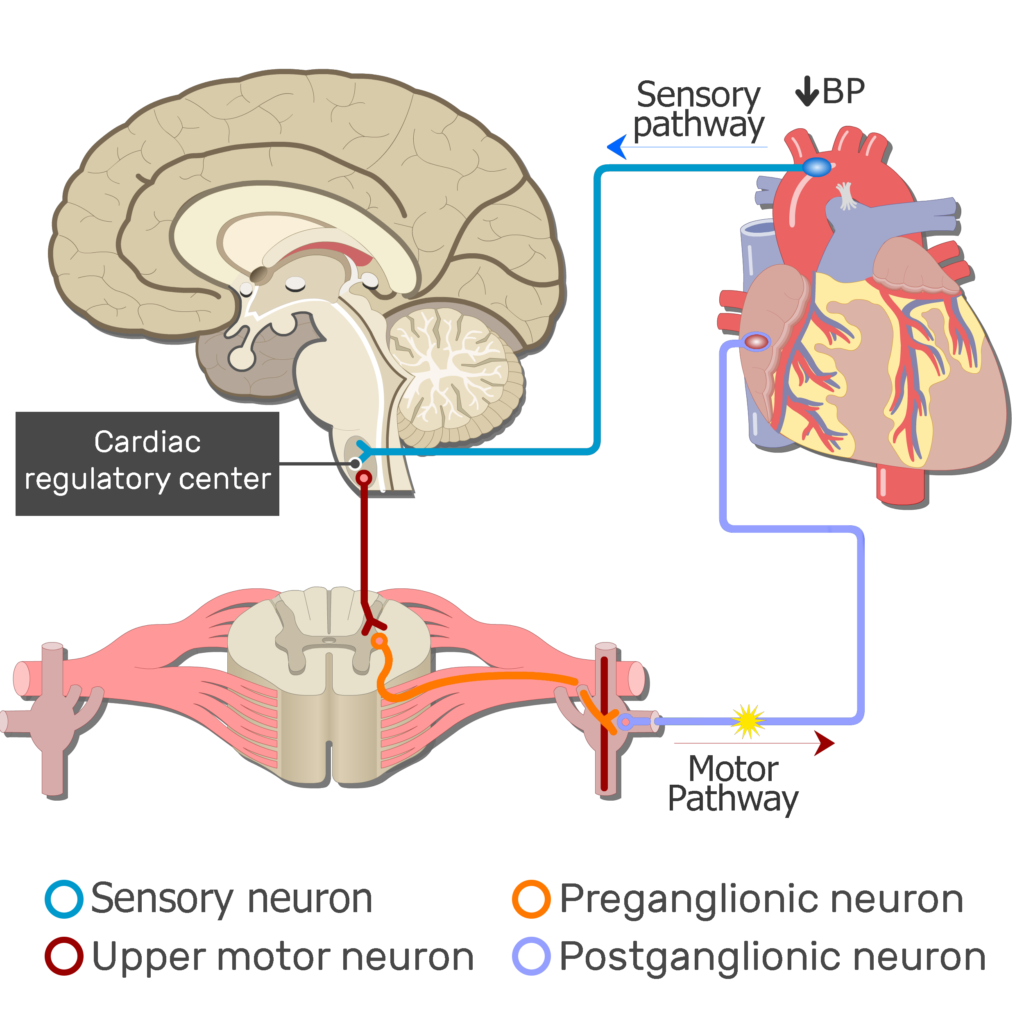
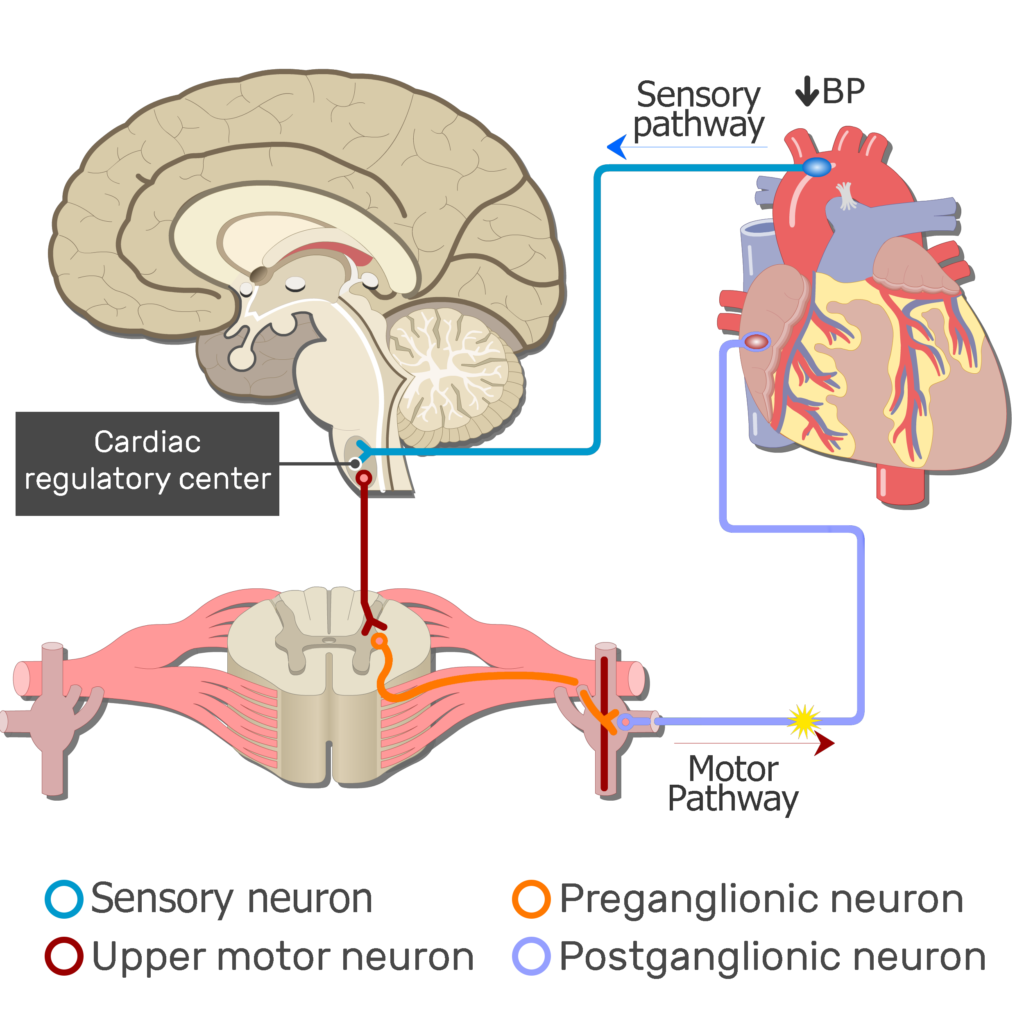
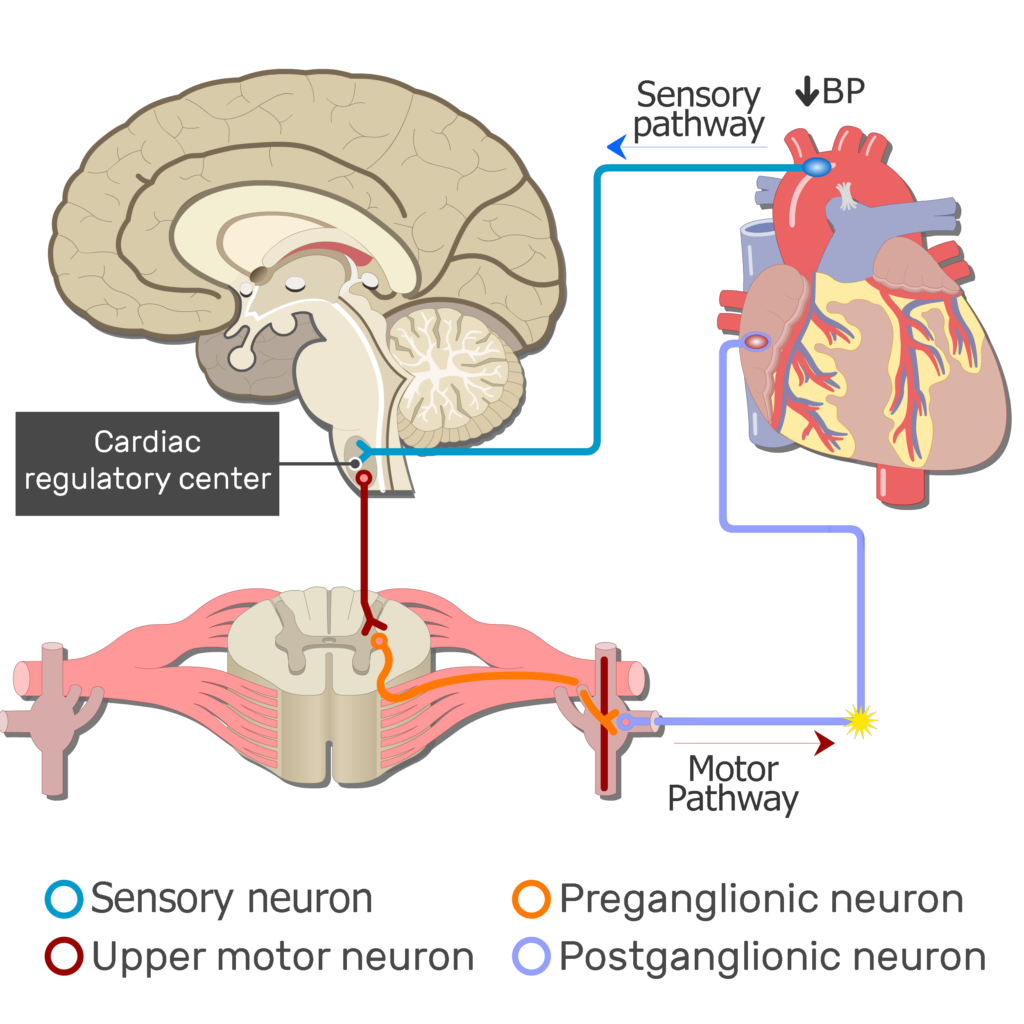
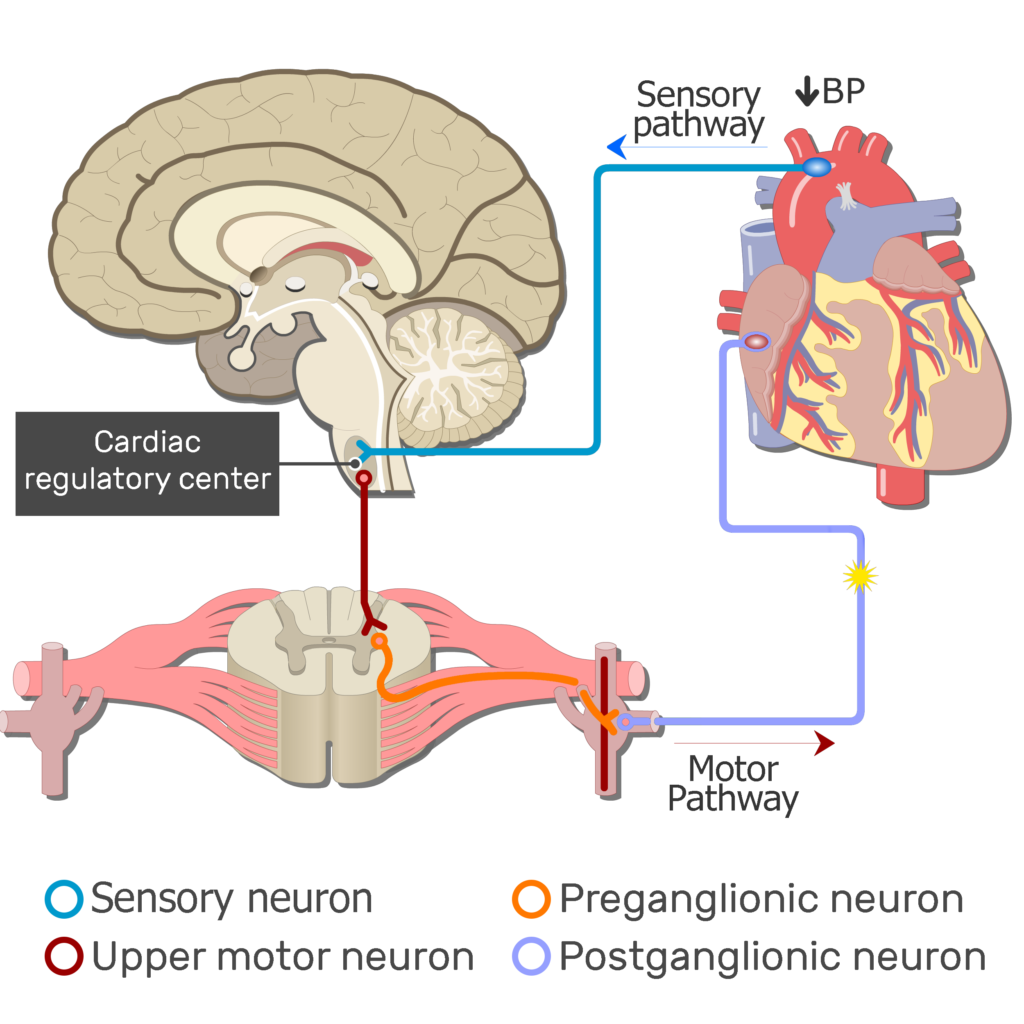
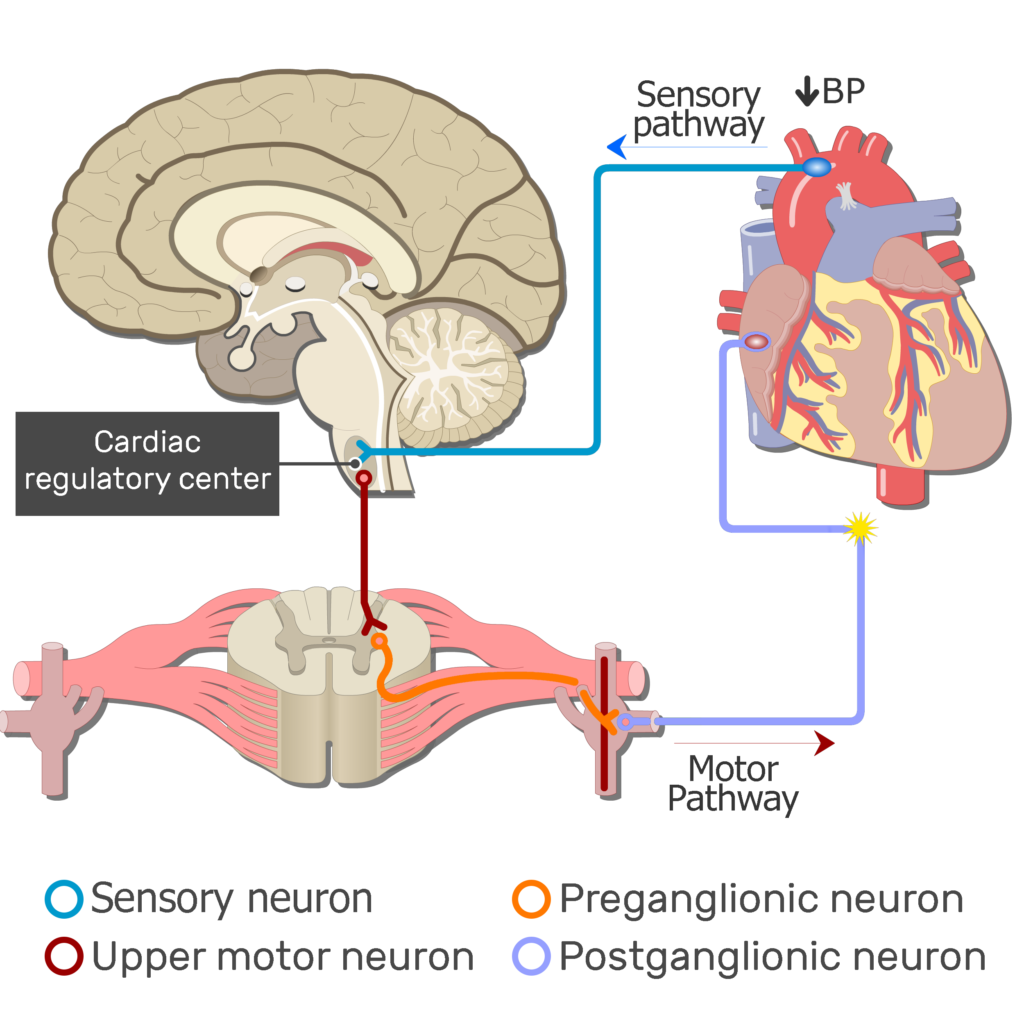
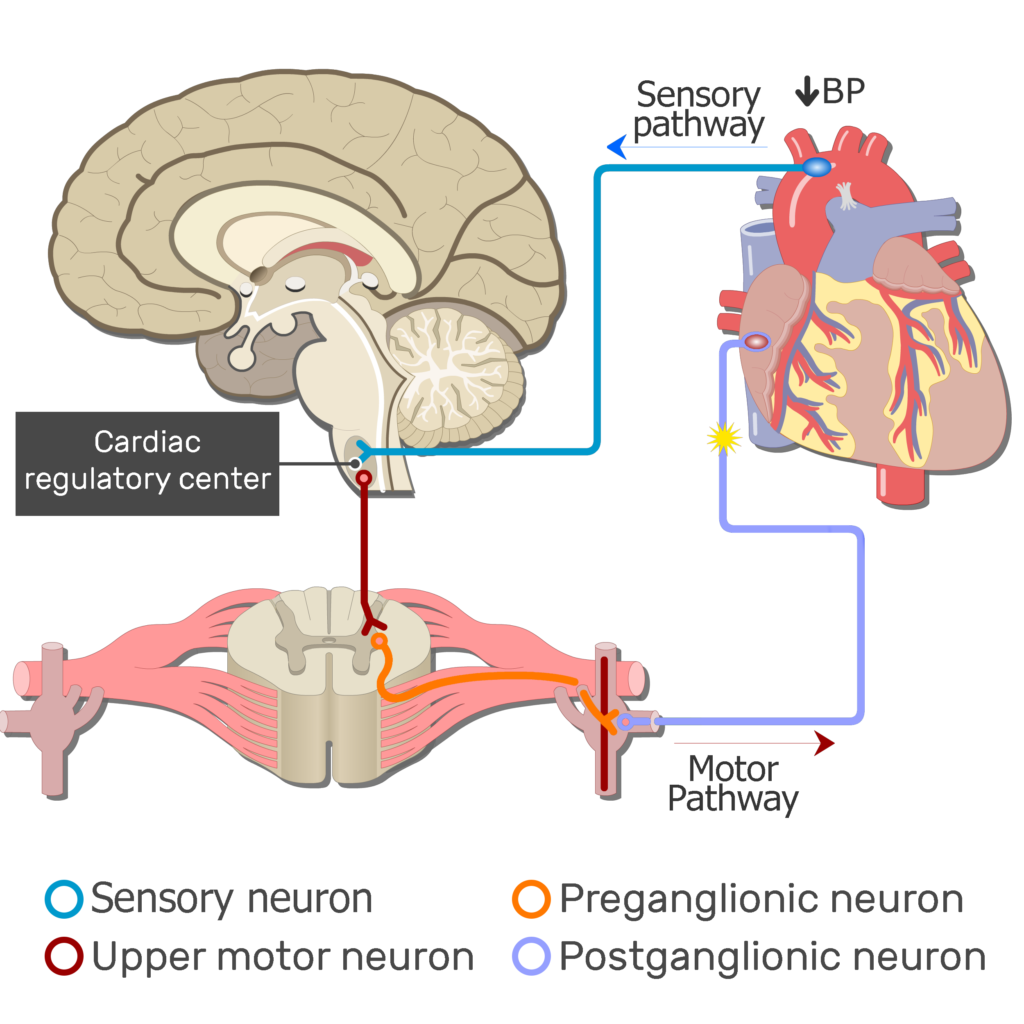
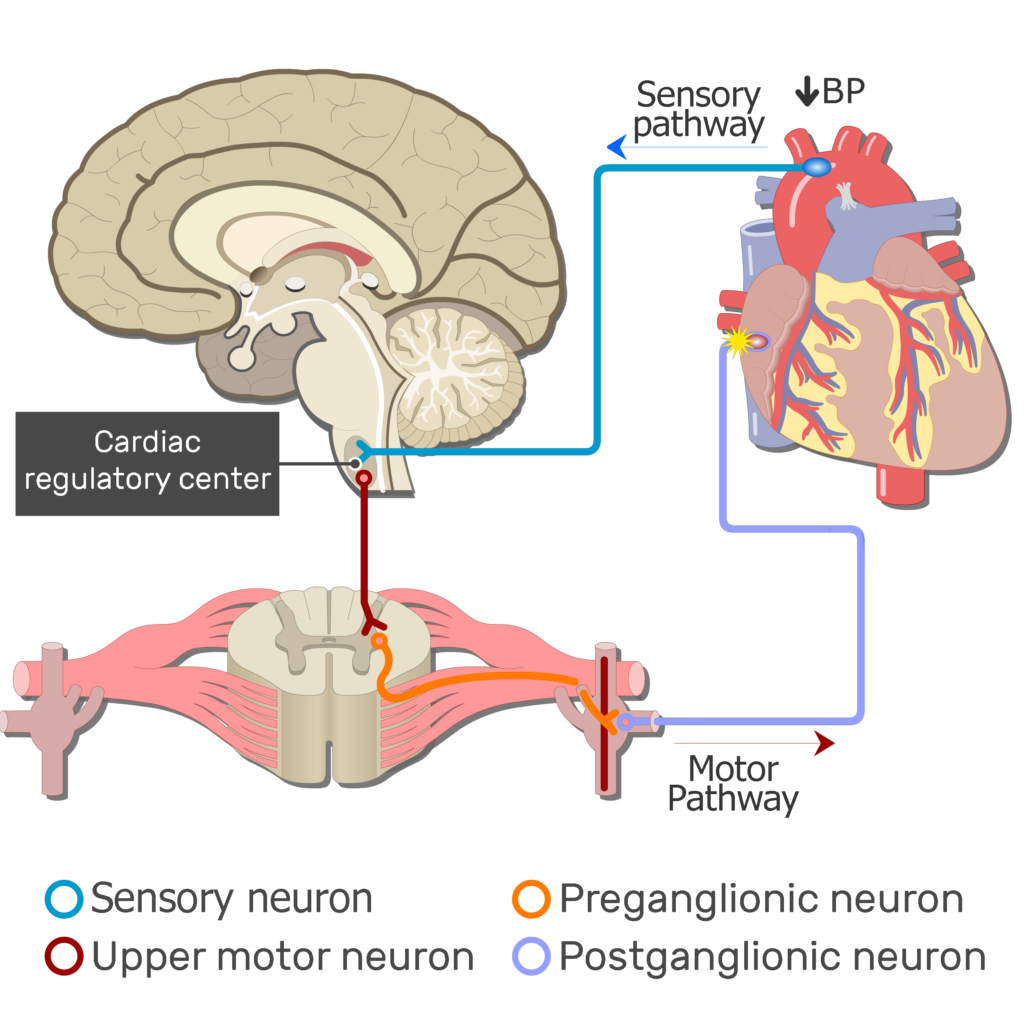
Shown here are examples of visceral or  autonomic pathways that allow the central nervous system (CNS) to regulate blood pressure and heart rate.

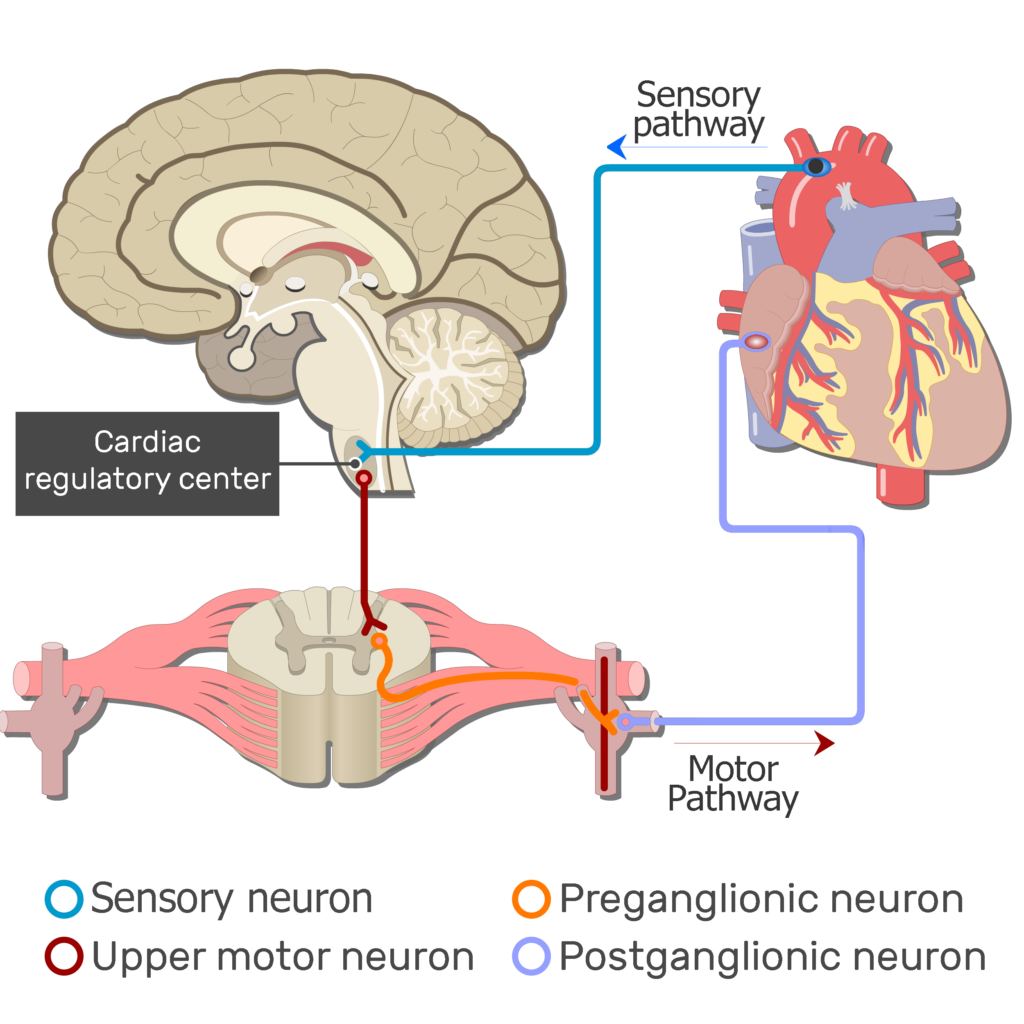
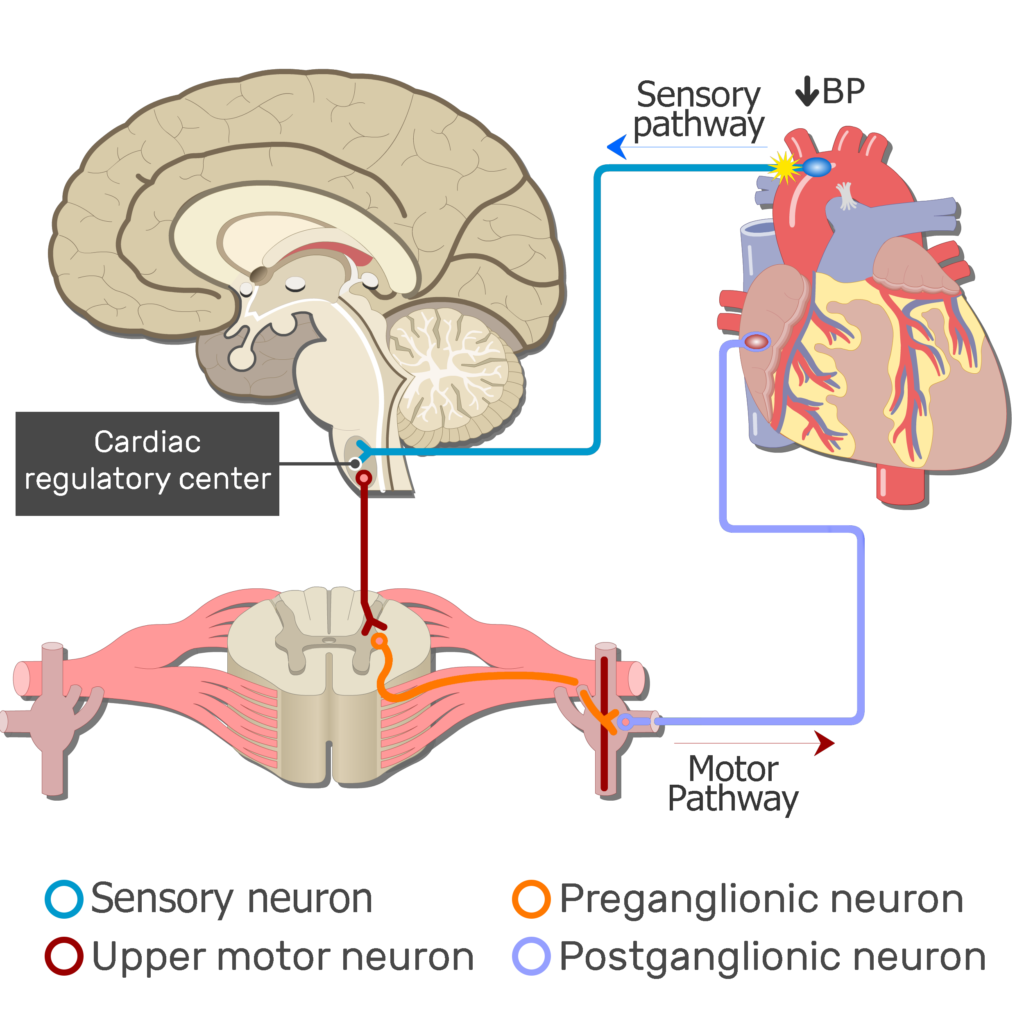
- When blood pressure (BP) declines, pressure receptors (baroreceptors) in the wall of the aortic artery
 detect the change and a corrective, involuntary reflex begins.
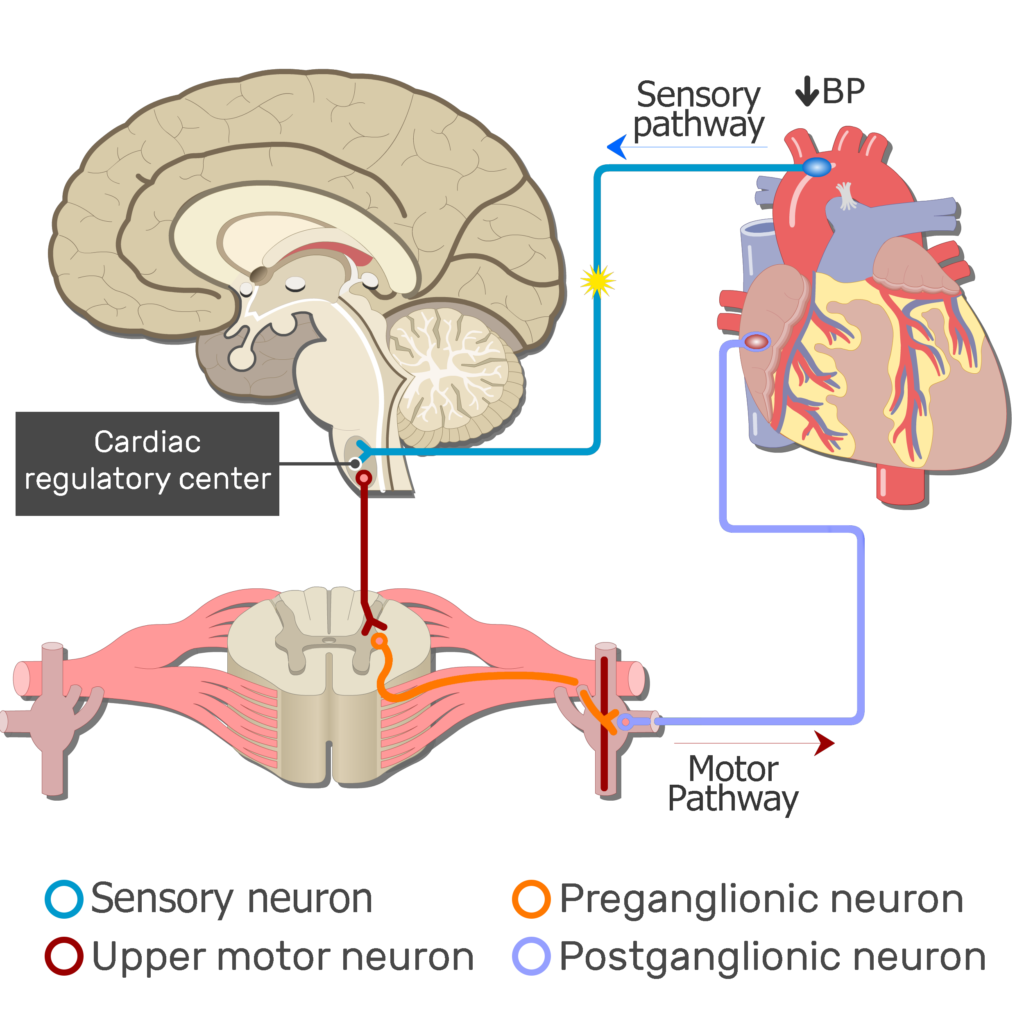
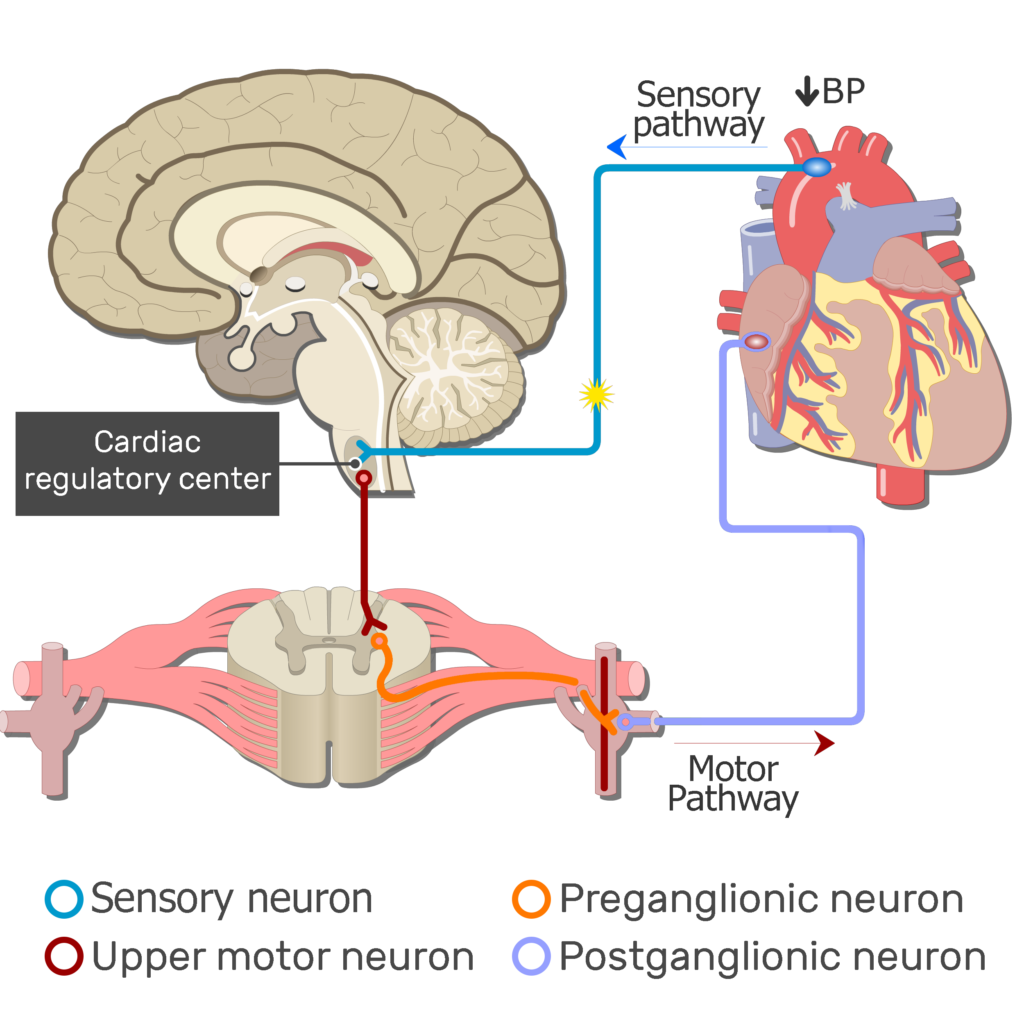
- Action potentials (electro-chemical impulses) are generated in autonomic sensory (afferent) neurons and conducted to the cardiac regulatory center in the brainstem.
Master nervous system anatomy in half the time using these interactive quizzes and worksheets.
- From the brainstem, response impulses are conducted down the spinal cord by CNS neurons.
- These impulses are then transmitted to sympathetic motor neurons (efferent neurons) that originate in the spinal cord. The motor neurons conduct the impulses out of the spinal cord sympathetic ganglion located next to the vertebral column. Here, synapses occur and a second set of neurons carry the impulses on to the heart.
- On their arrival, the impulses stimulate the hear to beat faster and more forcefully.
Related Articles

Somatic nervous system
Organization of the Somatic Nervous System; explained beautifully in an illustrated and interactive way.

Peripheral Nervous System
A diagrammatic approach to the structure & function of the peripheral nervous system featuring some comprehensive illustrations.
Major Organs and Divisions of the Nervous System
Major Organs and Divisions of the Nervous System; explained beautifully in an illustrated and interactive way.