




Nasal mucosa (respiratory mucosa): gross and microscopic anatomy
Olfactory epithelium: structure and function
Last update:
An introduction to the Olfactory Mucosa:
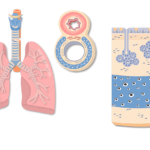
 Olfactory mucosa lines the roof of the nasal cavity and superior turbinates (= nasal conchae) and is structurally modified to detect odor-producing chemicals (= odorants).
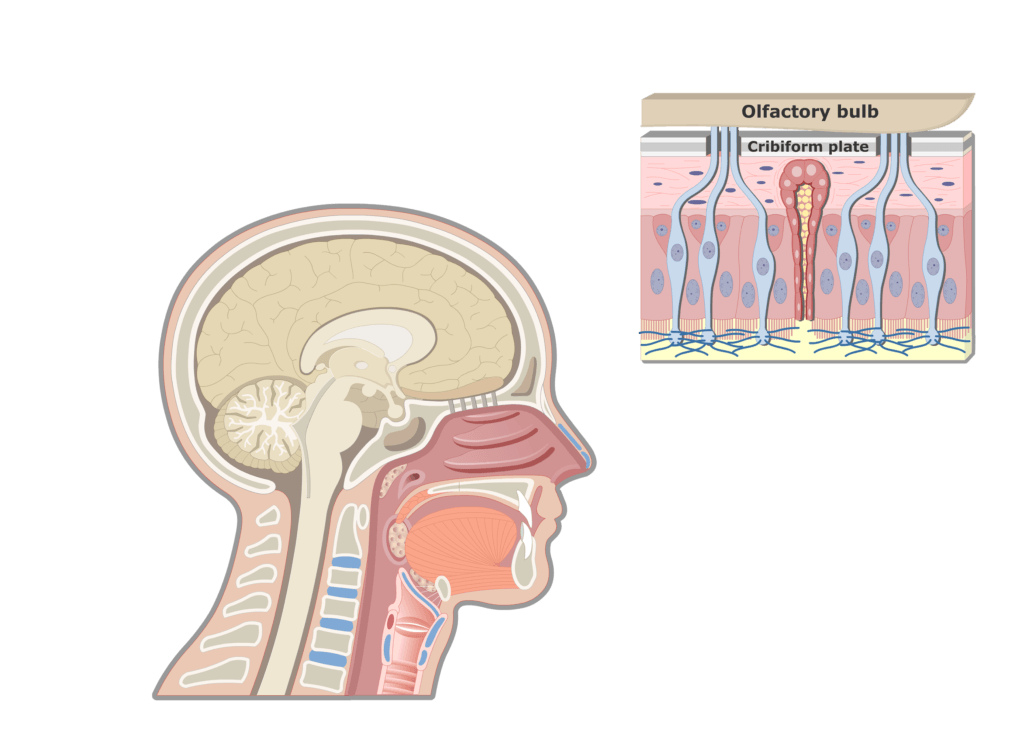
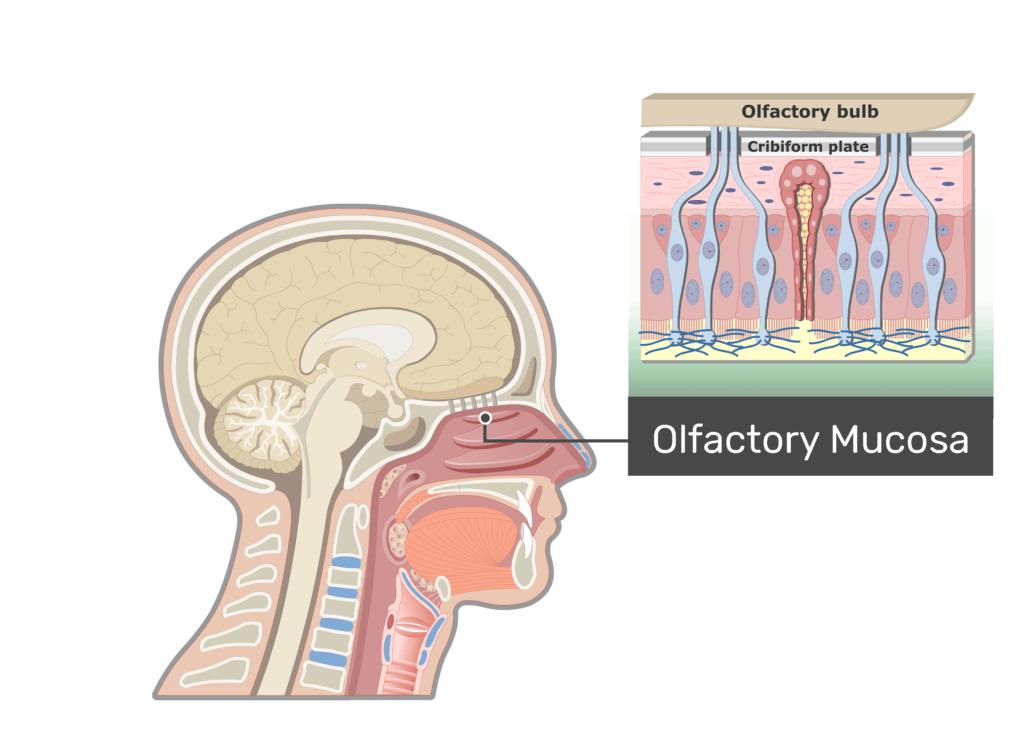
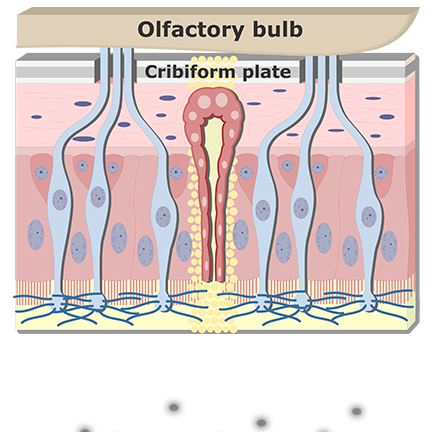
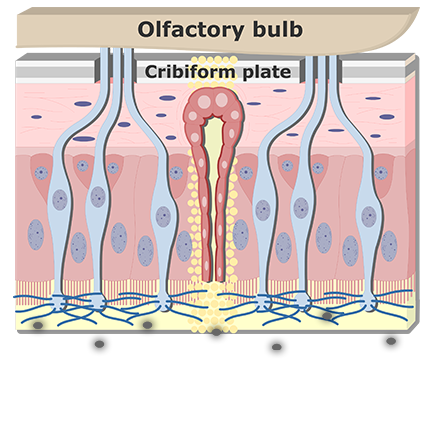
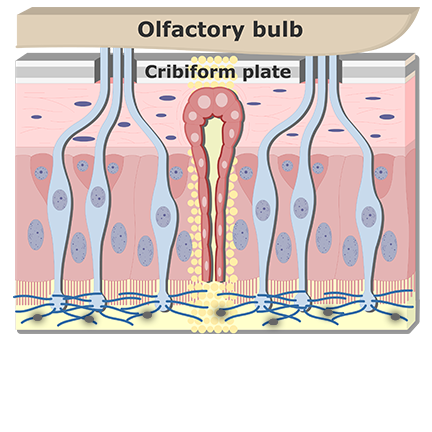
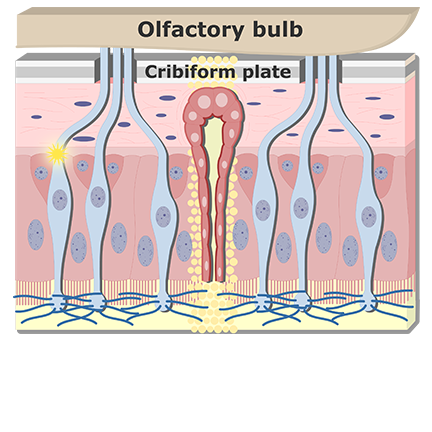
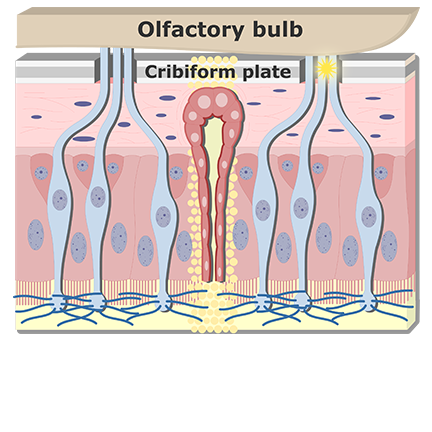
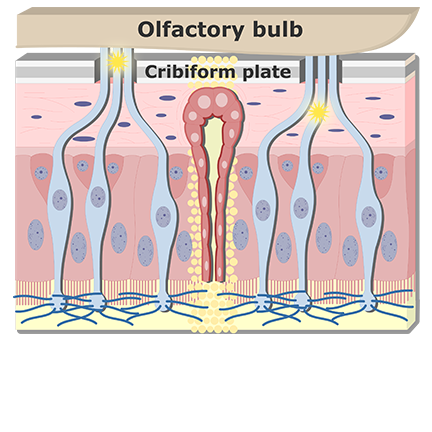
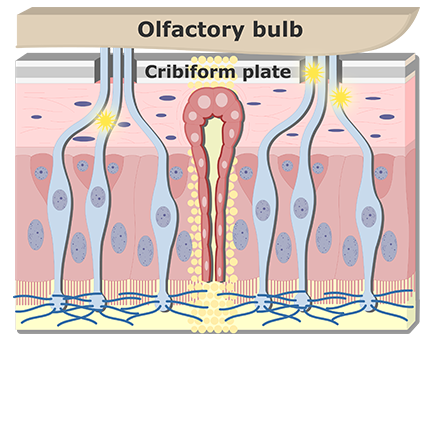
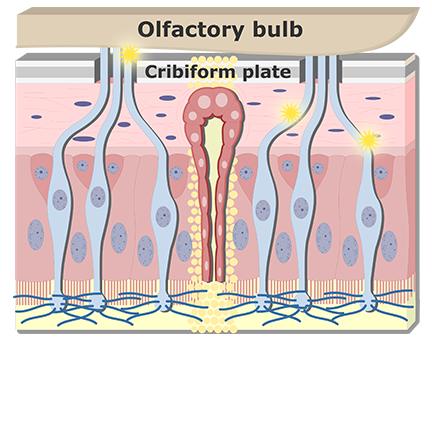
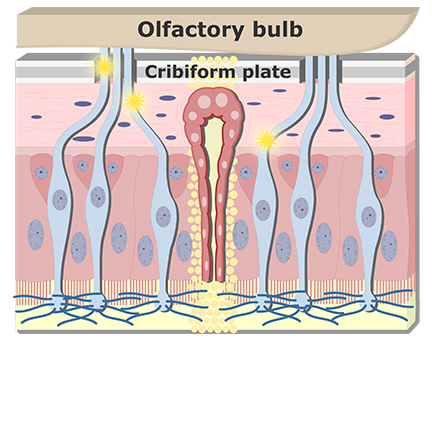
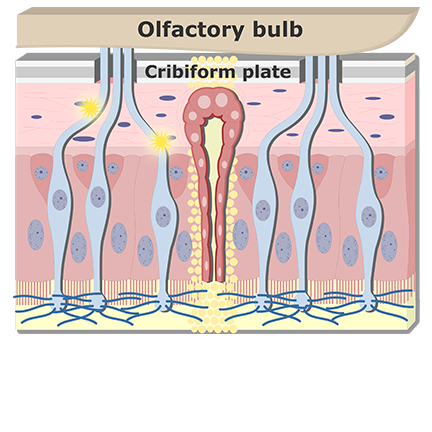
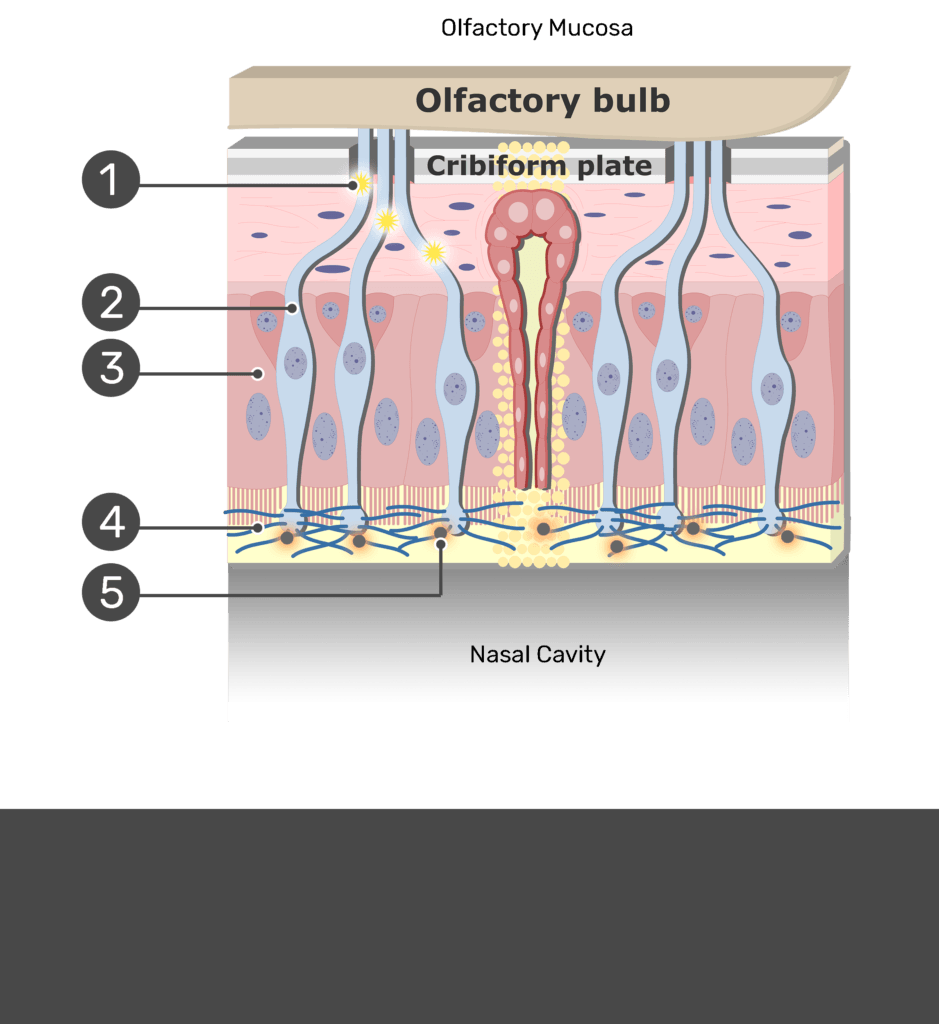
- An expanded view of the olfactory mucosa shows more detail about its layered composition.
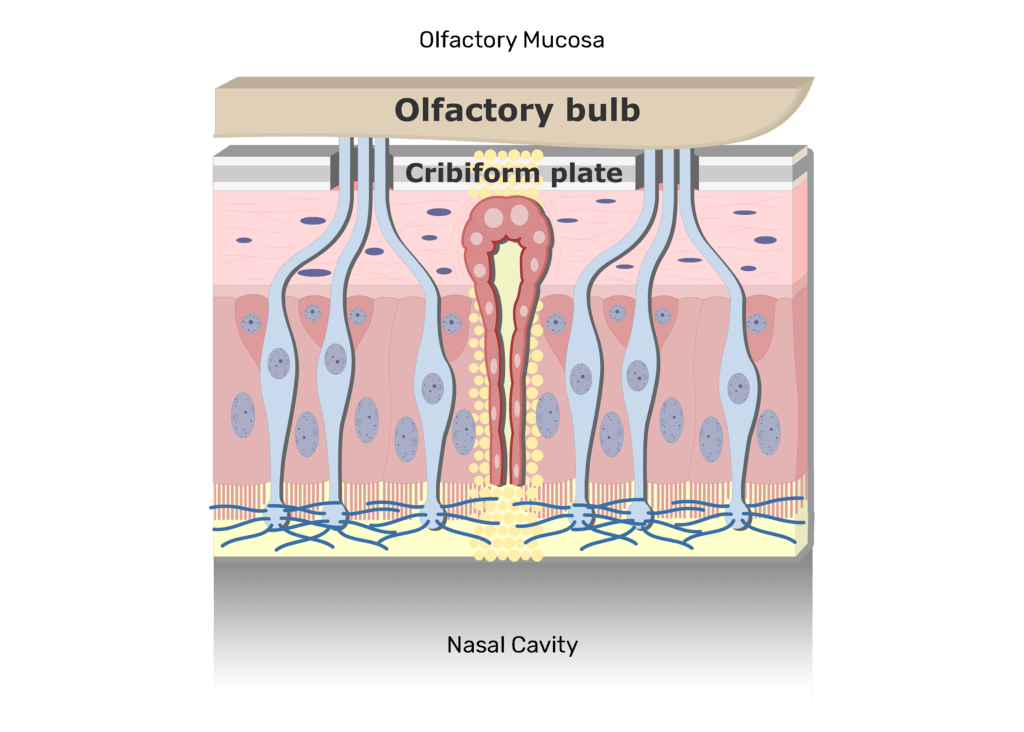
- In the epithelium layer are millions of specialized nerve cells referred to as olfactory receptors. The odorant-sensitive tips of the receptors protrude into the nasal cavity from the free surface of the epithelium. Several non-motile cilia extend from each bulbous tip. Along the cilia are many binding sites for odorants. Surrounding the receptors are many elongated supporting cells or sustentacular cells.
Have you been making any of these common anatomy learning mistakes?
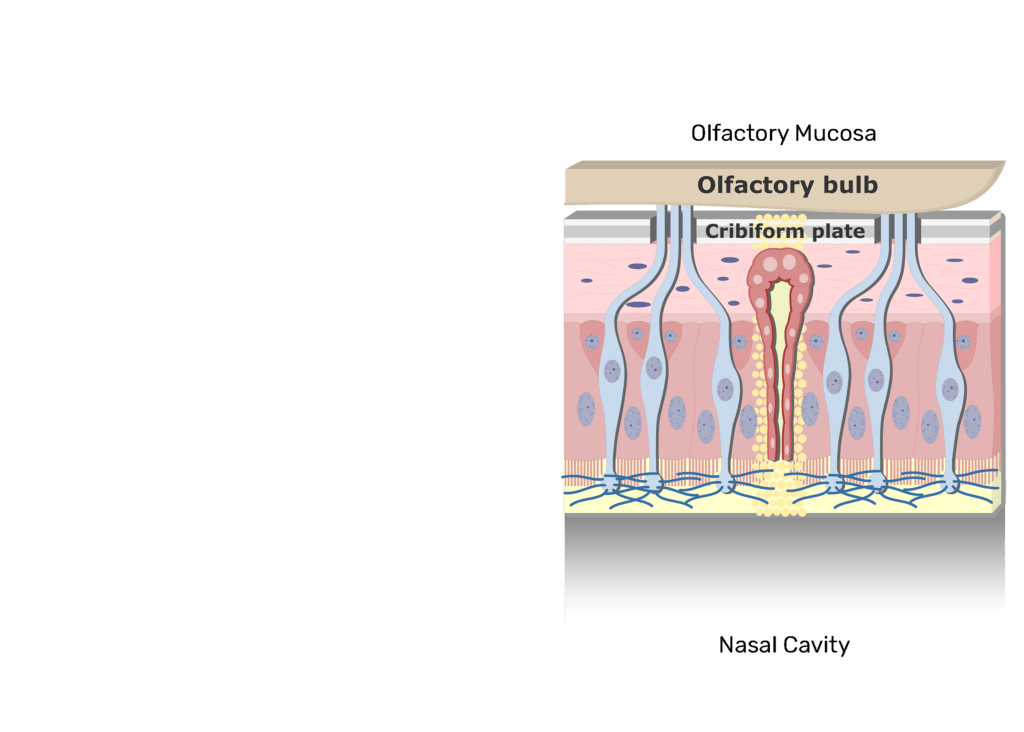
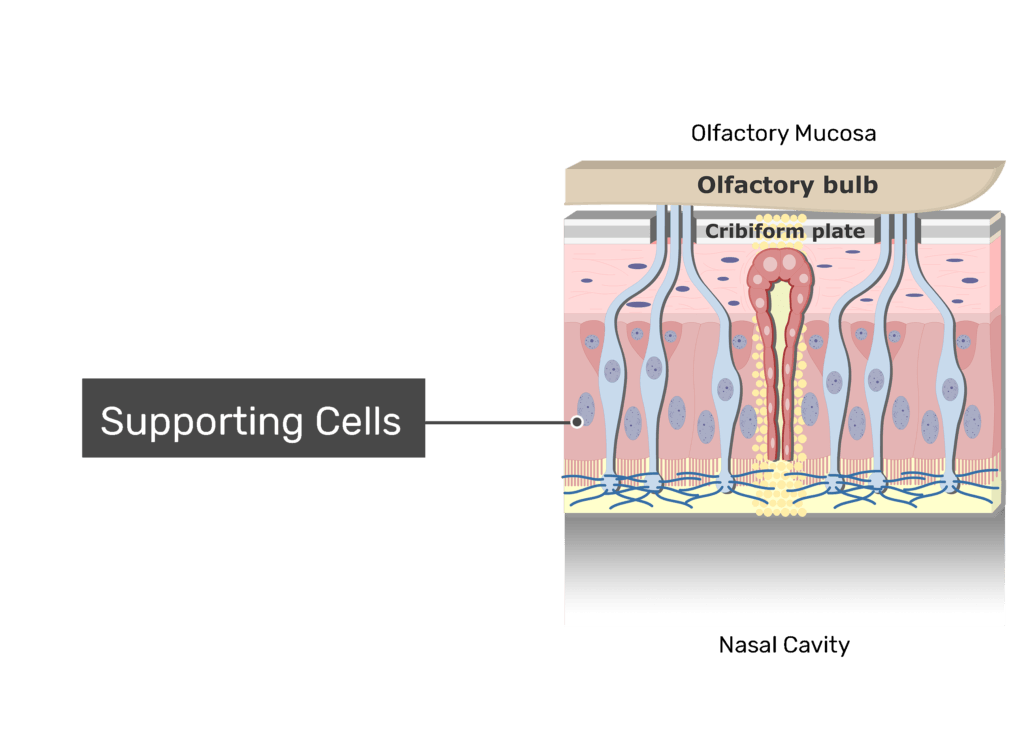
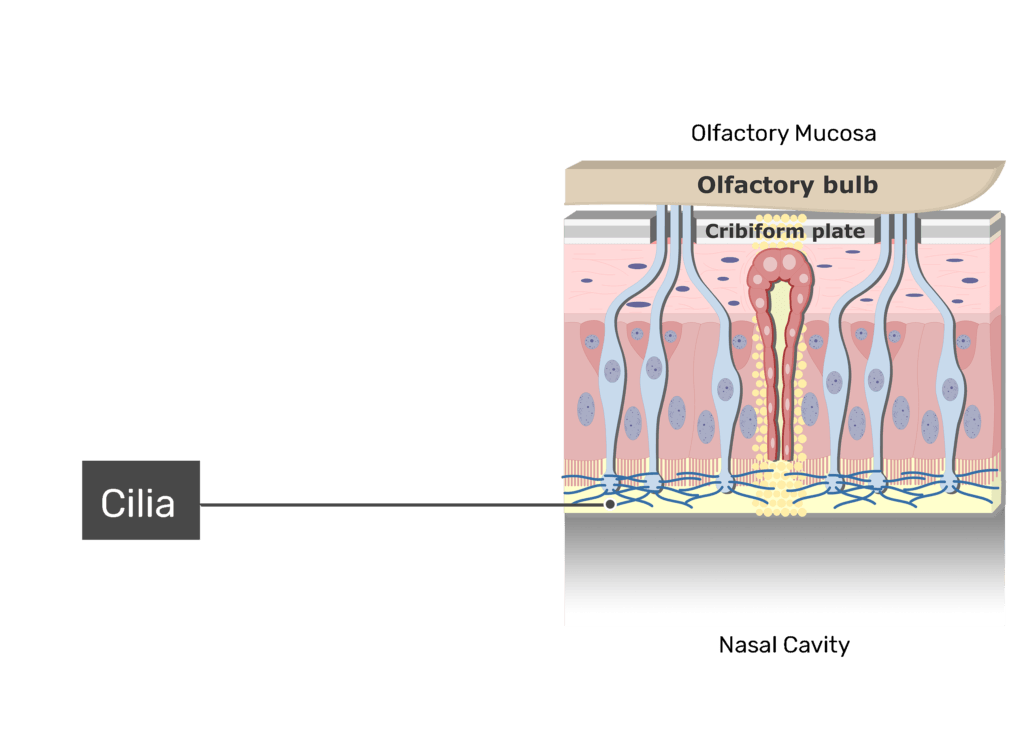
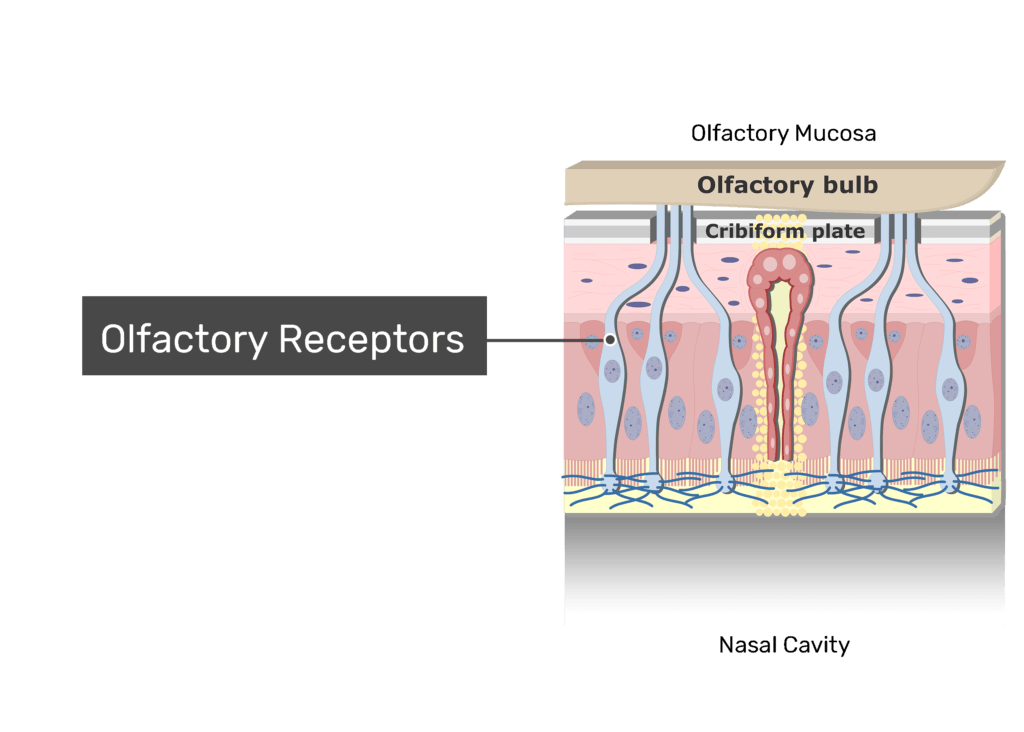
- A thin layer of watery mucus made by the supporting cells and Bowman’s (olfactory) glands covers the receptor cilia and microvilli. During inhalation, odorants are drawn into this fluid layer, where they dissolve and then bind to the cilia receptors.
- Binding of the odorants causes the olfactory receptors to generate electro-chemical impulses (= action potentials). Receptor axons carry the impulses through the holes in the cribiform plate to the olfactory bulbs at the base of the brain.
An Overview of the Olfactory Mucosa:

Test yourself while observing the Olfactory Mucosa
Related Articles

Visual Cortex Areas
Visual Cortex Areas; explained beautifully in an illustrated and interactive way.
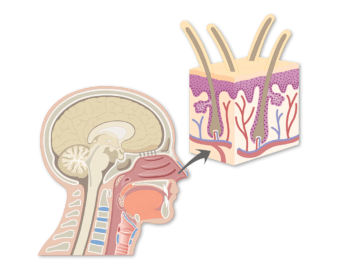
Vestibule Region of the Nasal Cavity
The vestibule is the portion of the nasal cavity that lies directly posterior to the external nares. It is lined by stratified squamous epithelium providing as a barrier that helps protect the vestibule from damage. A layer of mucus typically covers the outer surface of the vibrissae.
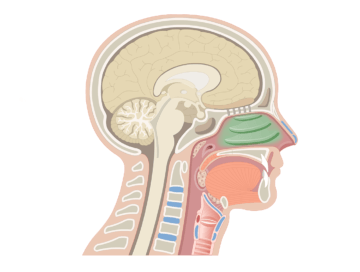
Turbinate Bones (Nasal Conchae)
There are three turbinates on each side of the nasal cavity (Superior, middle, and inferior). Grooves are found between the curved turbinates. During inhalation, air is directed over and under the turbinates. The surface mucosa conditions or prepares the air so it can safely travel into the lungs.