

Lungs Anatomy | Shapes and Surfaces of the Lungs
Respiratory System Anatomy – Major Zones & Divisions
Last update:
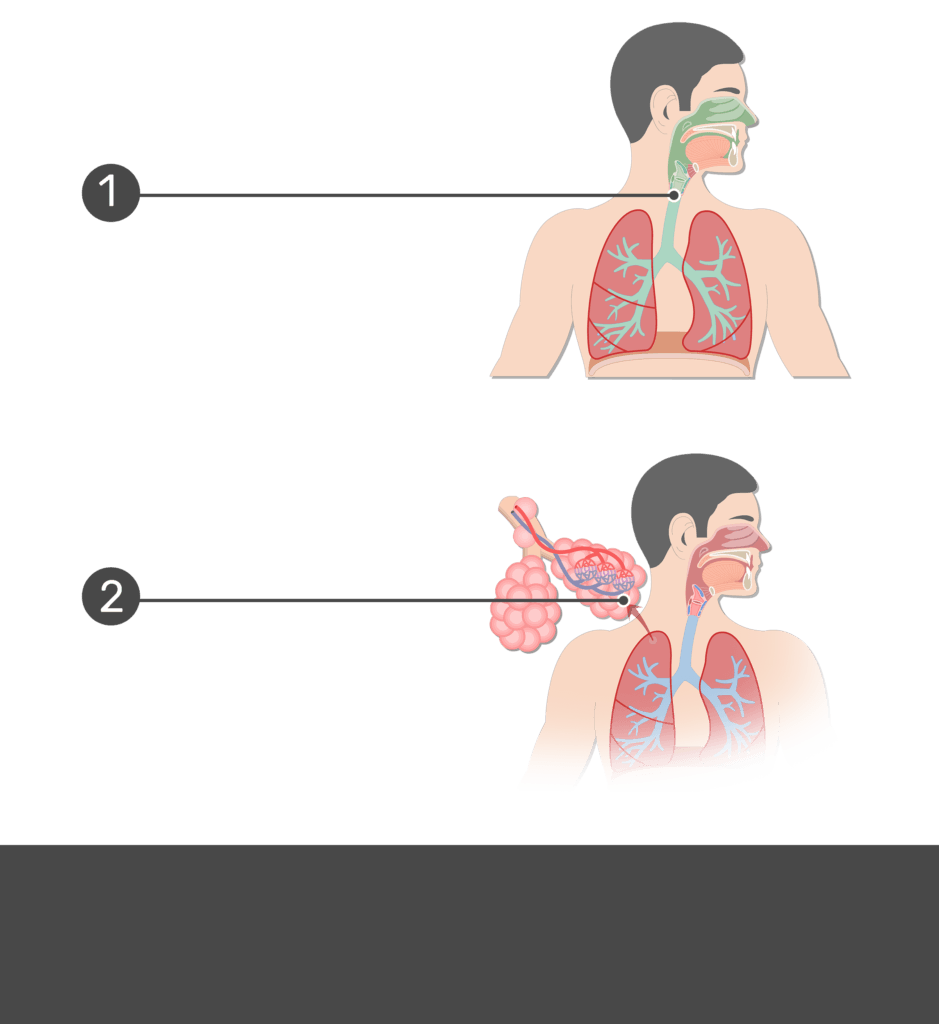
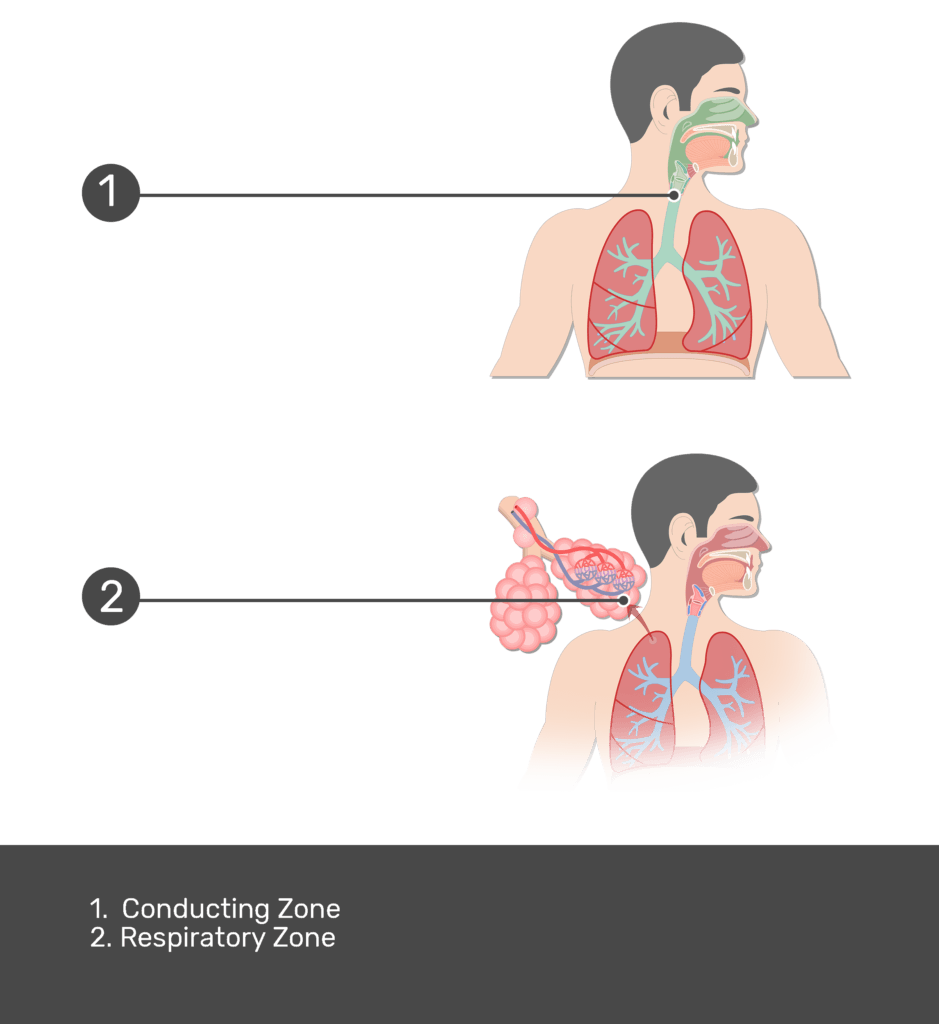
Functionally, the respiratory system is separated into a conducting zone and respiratory zone.
- The
 conducting zone consists of the nose, pharynx, larynx, trachea, bronchi, and bronchioles. These structures form a continuous passageway for air to move in and out of the lungs.
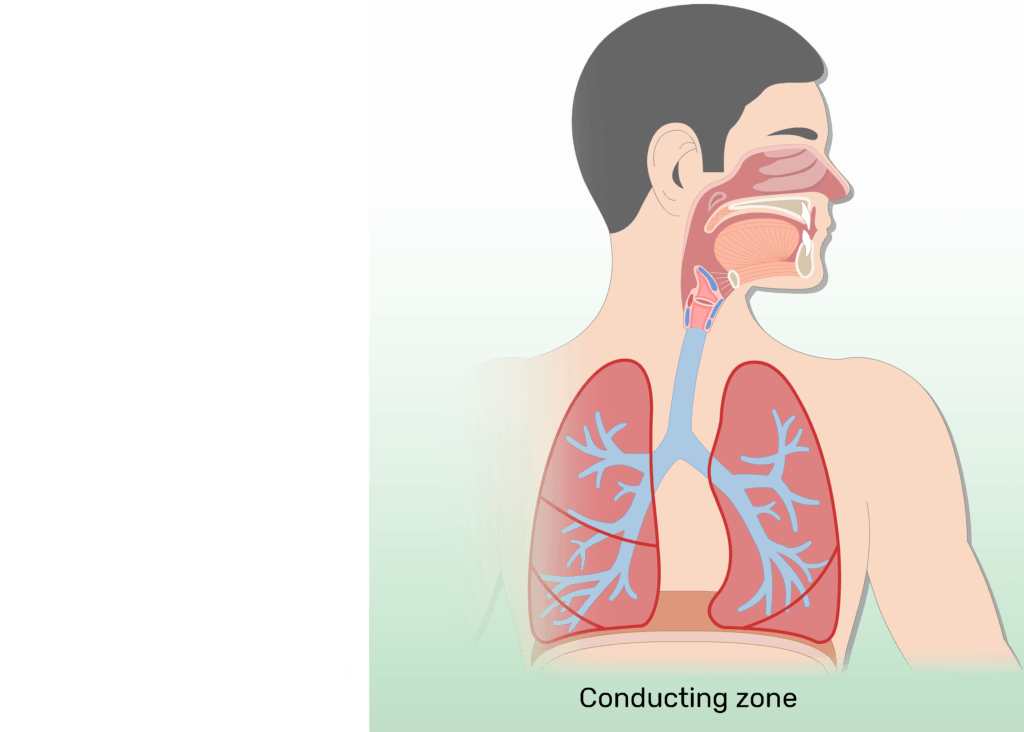
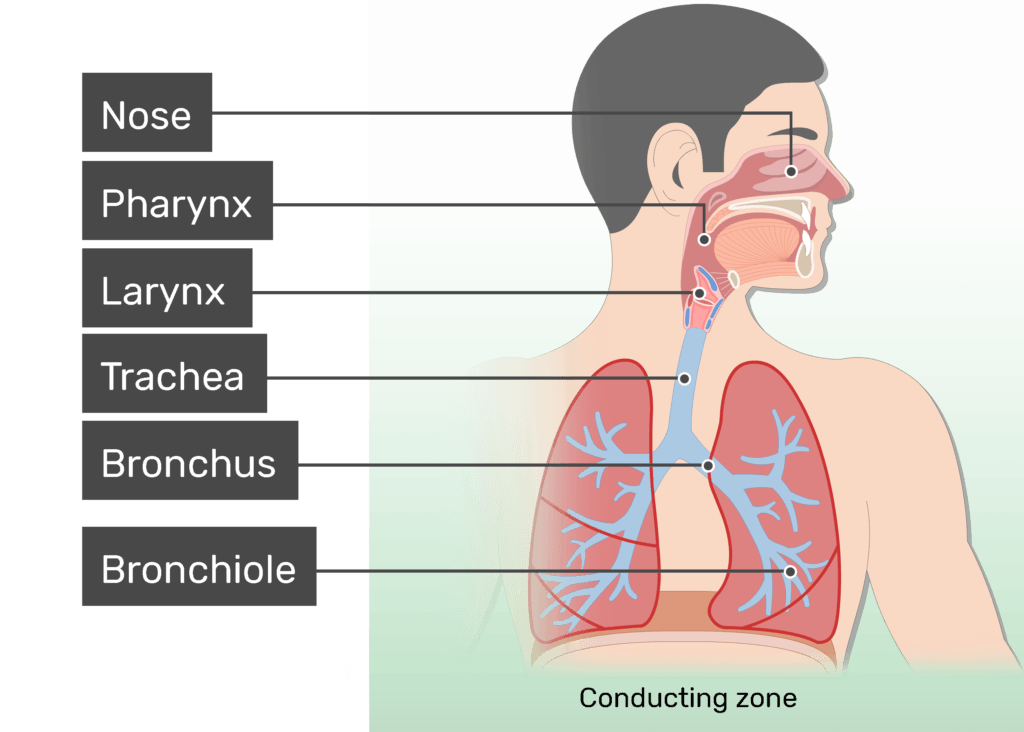
The conducting zone.
Need a hand learning the anatomy of the respiratory system? Check out these free respiratory system quizzes and labeled diagrams.
- The respiratory zone is found deep inside the lungs and is made up of the respiratory bronchioles, alveolar ducts, and alveoli. These thin-walled structures allow inhaled oxygen (O2) to diffuse into the lung capillaries in exchange for carbon dioxide (CO2).
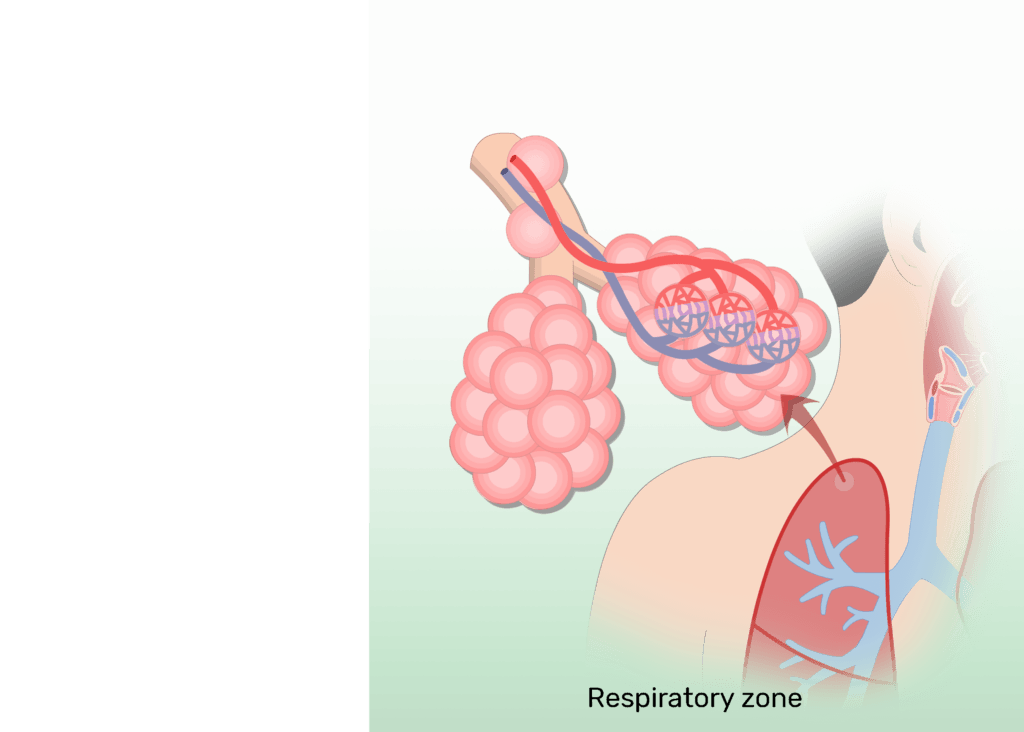
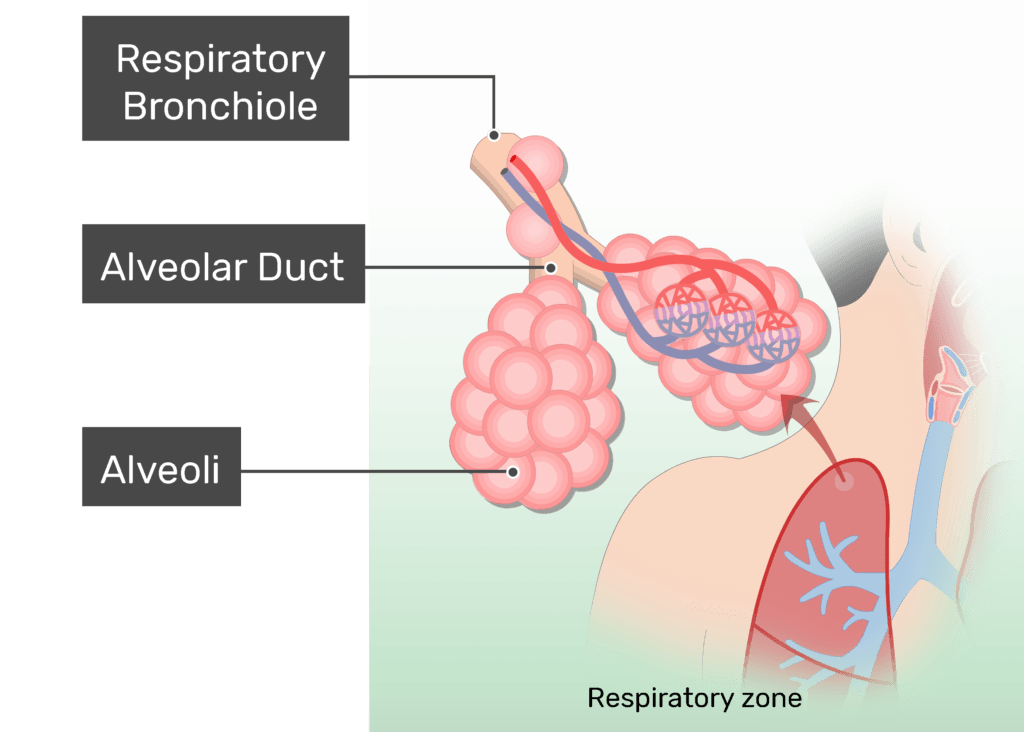
The respiratory zone.
Anatomically, the same structures are often divided into the upper and lower respiratory tracts.
- The upper respiratory tract structures are found in the head and neck and consist of the nose, pharynx, and larynx.
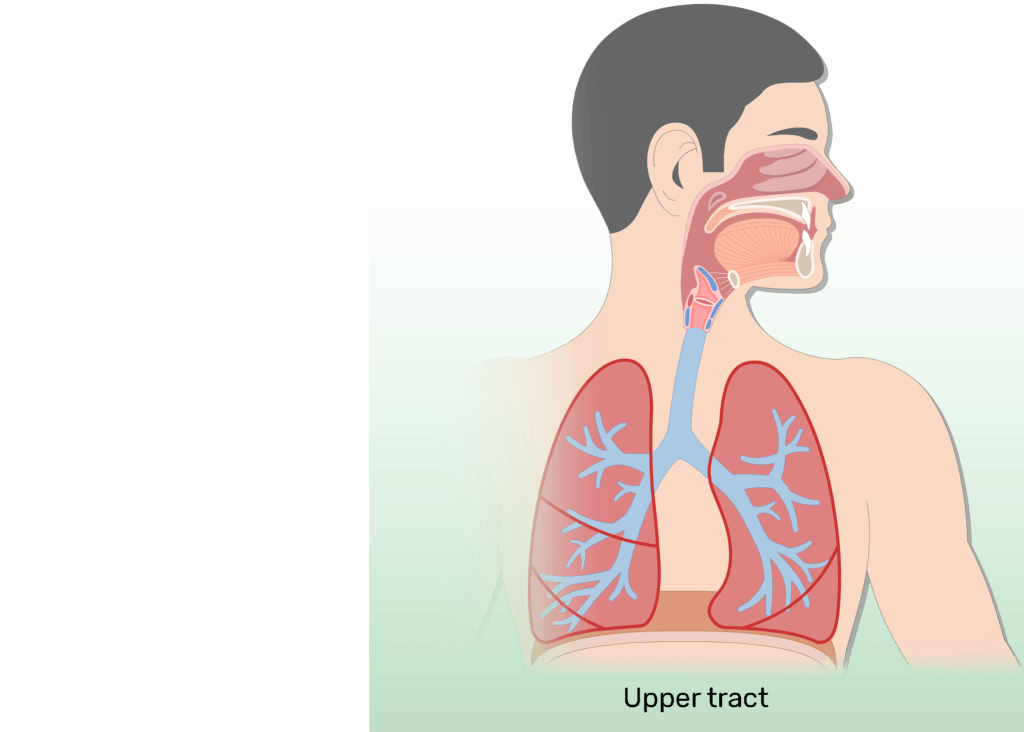
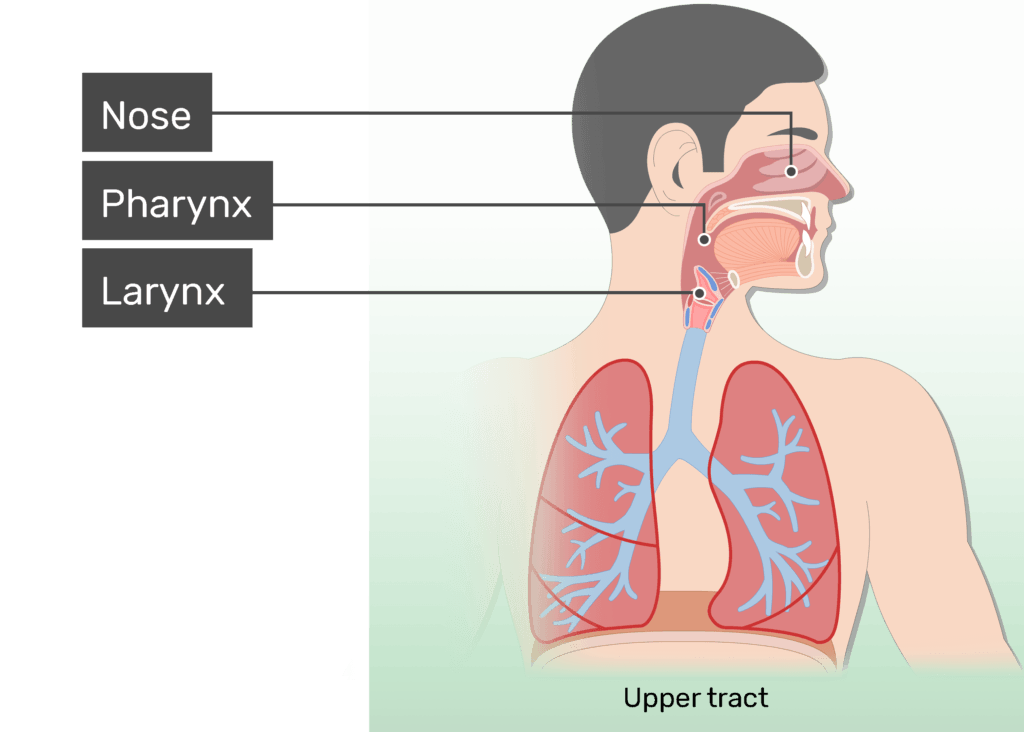
The upper respiratory tract
- The lower respiratory tract structures are located in the thorax or chest and include the trachea, bronchi, and lungs (= bronchioles, alveolar ducts, and alveoli).
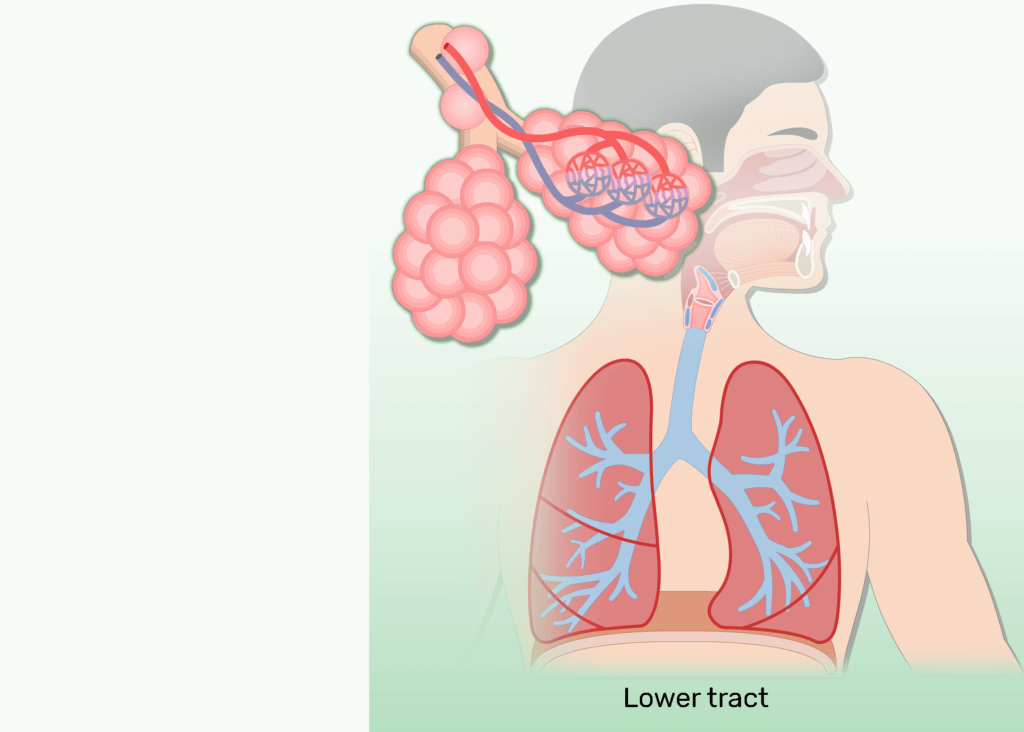
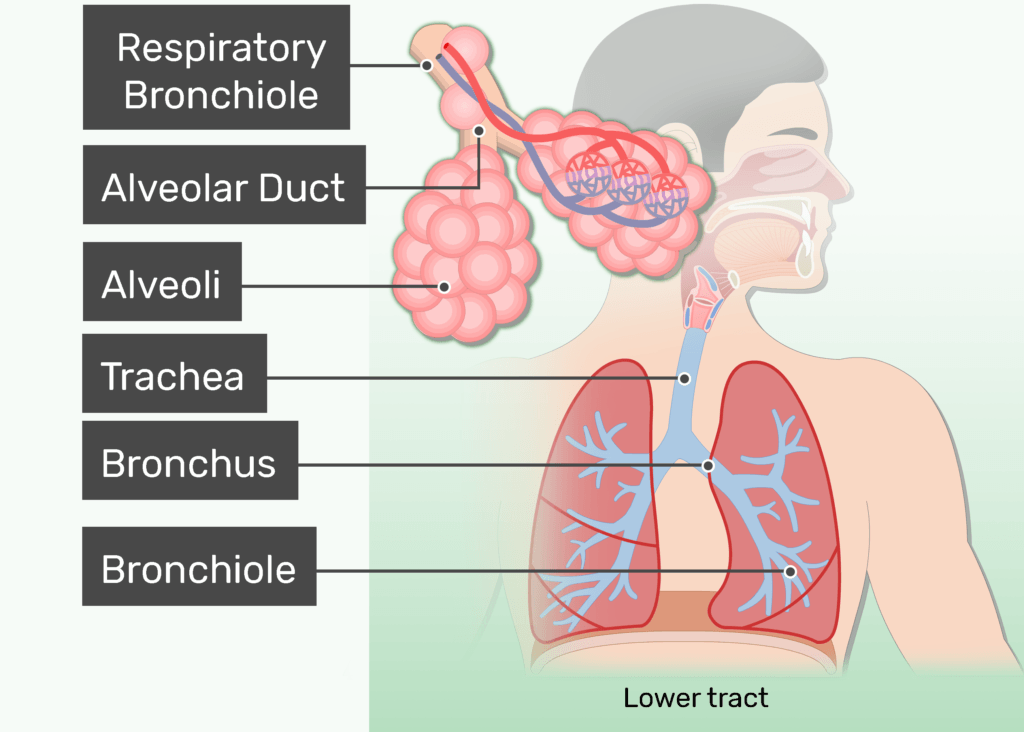
The lower respiratory tract
Please note that many authorities include the larynx with the lower respiratory tract structures.
An Overview of the Major Zones and Divisions of the Respiratory System:
Related Articles

Secondary lung lobules
Walls of connective tissue (or septa) partitioned the bronchopulmonary segments into many polygonal-shaped secondary pulmonary lobules. A secondary pulmonary lobule typically contains 3-5 terminal bronchioles.
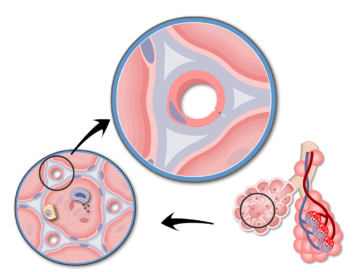
Respiratory Membrane and Gas Exchange
An interactive demonstration of the structure of the respiratory membrane and the mechanism of gas exchange occurring in the lungs.
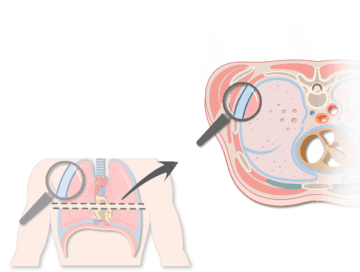
Pleural cavity and pleura
Each lung is enveloped in a double-membrane pleural sac (visceral and parietal layer). A thin layer of watery fluid is secreted into the pleural cavity that separates the layers.